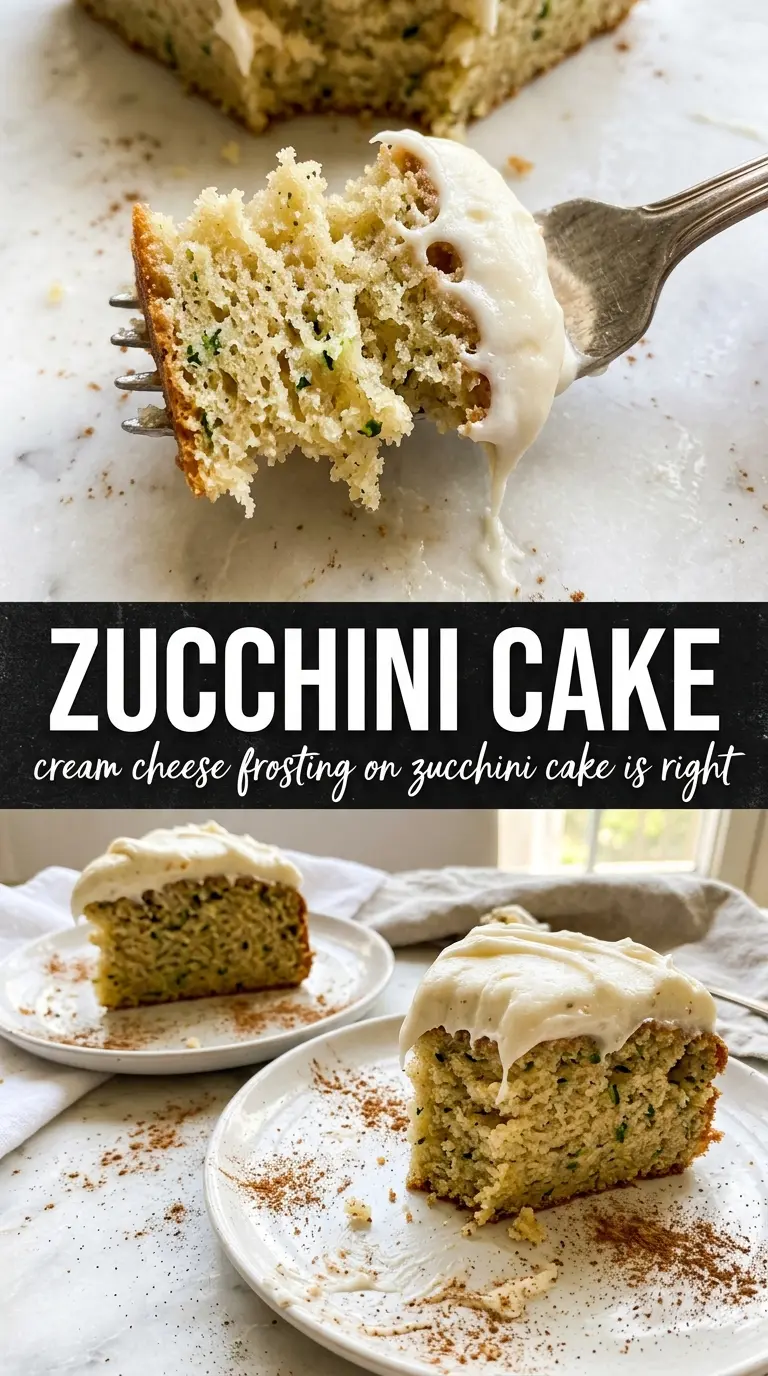
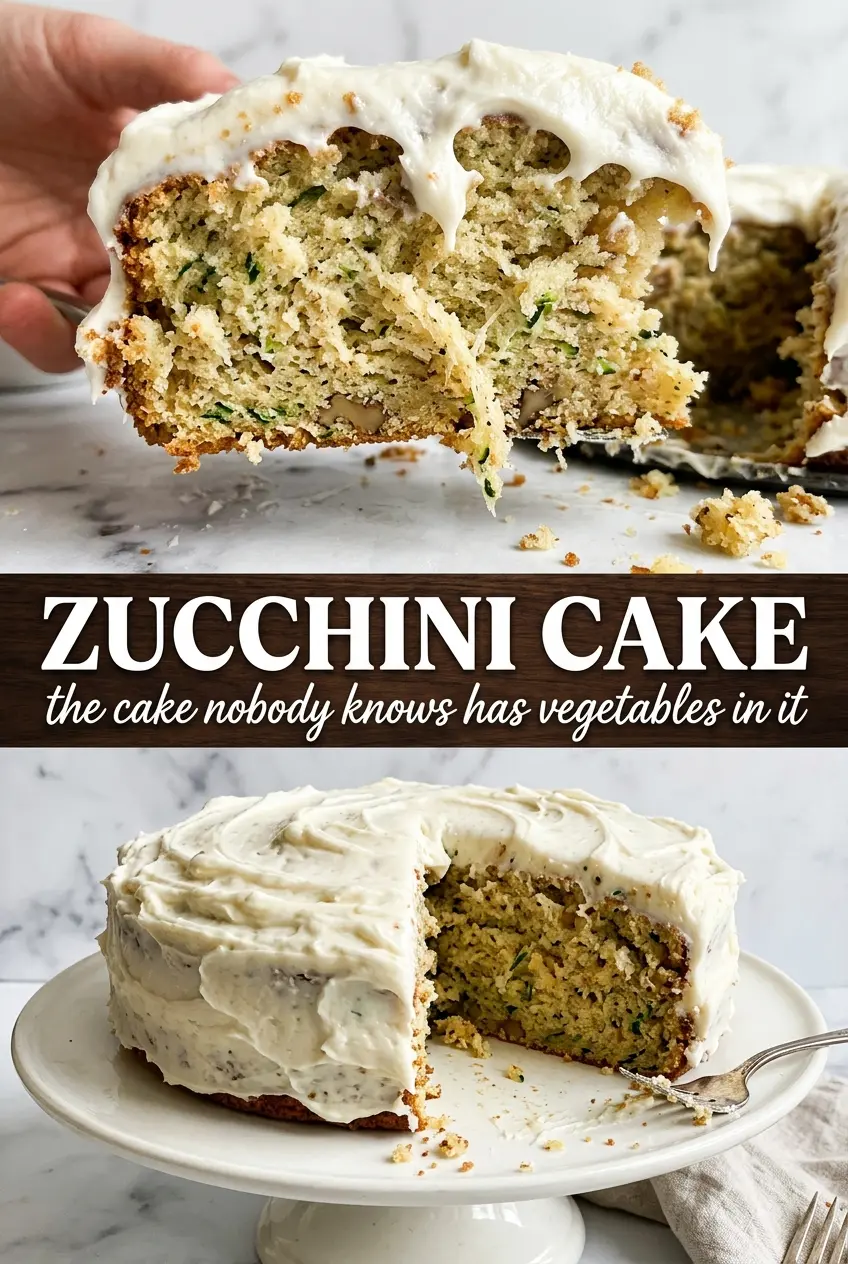
Zucchini cake earns its place by baking up unbelievably tender, with a crumb that stays moist for days and a warm spice note that tastes more like a cozy carrot cake cousin than a vegetable dessert. The zucchini disappears into the batter in the best way: it keeps the cake soft without making it heavy, and the cream cheese frosting gives every square a tangy, creamy finish that balances the sweetness.
This version works because the zucchini is grated fine and squeezed dry before it ever touches the bowl. That step keeps the batter from turning watery, which is the mistake that makes some zucchini cakes bake up gummy in the middle. The oil also matters here. It gives you a softer, more even crumb than butter would, and it keeps the cake tender even after a night in the fridge.
Below, I’ll show you how to keep the cake fluffy instead of dense, when to frost it so the topping stays thick and smooth, and how to adapt it if you want walnuts, no nuts, or a slightly less sweet finish.
The cake was moist without being heavy, and the frosting set up thick and smooth after chilling. I used the walnuts and they added the perfect little crunch with the cinnamon.
Like this zucchini cake? Save it for the next time you want a moist spiced sheet cake with thick cream cheese frosting.
The Zucchini Needs to Be Dry Before It Ever Hits the Batter
The most common zucchini cake problem is extra moisture, not lack of it. Zucchini carries a lot of water, and if you skip the squeeze, the cake can bake up dense in the center or sink a little after cooling. Grate it, then press it in a clean kitchen towel or several layers of paper towels until it feels damp instead of wet.
That same moisture question is why this cake uses both baking soda and baking powder. The soda helps with browning and lift, while the baking powder gives the batter a little backup rise so the crumb stays soft instead of tight. Don’t overmix once the flour goes in. A few streaks are fine; overworking the batter builds structure you don’t want in a tender sheet cake.
What Each Ingredient Is Actually Doing in This Cake
- All-purpose flour — Gives the cake its structure without making it bready. This is one place where standard flour is exactly right.
- Cinnamon and nutmeg — They turn the zucchini into a warm spice cake instead of a plain sweet loaf. The nutmeg is subtle, but it adds depth that makes the flavor read more like a classic bakery cake.
- Vegetable oil — Oil keeps the crumb soft and moist even after chilling. Butter can work, but the cake won’t stay tender quite as long.
- Eggs — They bind the batter and help the cake rise evenly. Room-temperature eggs blend faster, but cold eggs will still work if that’s what you’ve got.
- Grated zucchini — This is the ingredient that makes the cake plush. Use the fine side of a box grater for the most even texture, and squeeze it dry after grating.
- Cream cheese frosting — The tang cuts through the sweetness and gives the cake its classic finish. Softened cream cheese and butter matter here; if they’re too cold, the frosting stays lumpy.
- Walnuts — Optional, but they add a nice crunch and a little bitterness against the sweet frosting. Skip them for a smoother slice or if you need a nut-free cake.
Building the Batter Without Turning It Dense
Mix the wet ingredients until they look smooth, not fluffy
Beat the sugar, oil, eggs, and vanilla until the mixture looks glossy and even. You’re not trying to whip air into it the way you would for a sponge cake. If it looks pale and slightly thickened, that’s enough. Once the zucchini goes in, stir just until it’s spread through the batter; it should look moist but not soupy.
Add the dry ingredients at the end and stop early
Whisk the flour, cinnamon, baking soda, baking powder, salt, and nutmeg together first so the spices and leaveners disperse evenly. Then fold them into the wet mixture with a spatula until the flour disappears. If you keep stirring after that point, the cake can turn chewy around the edges and tight in the middle. Walnuts go in last so they stay intact.
Bake until the center springs back lightly
Spread the batter into a greased 9×13 pan and bake at 350°F until a toothpick comes out clean or with a few moist crumbs. The top should look set and lightly golden, and the middle should spring back when pressed gently. If the middle still looks shiny, give it a few more minutes. Pulling it too early is the easiest way to end up with a gummy line through the center.
Let it cool completely before frosting
The cake needs to be fully cool before the frosting goes on. If it’s even a little warm, the cream cheese frosting softens and slides instead of sitting in thick swirls. For the smoothest finish, beat the frosting until light and fluffy, then spread it in generous swoops over the cooled cake.
How to Adapt This Cake When You Want It a Little Different
Nut-Free Zucchini Cake
Leave out the walnuts and the cake stays just as moist and tender. You lose the crunch, but the crumb becomes a little smoother, which is nice if you want a more classic sheet cake slice.
Dairy-Free Frosting Swap
Use a plant-based cream cheese and a good dairy-free butter in the frosting. The texture will be a touch softer and the tang may be milder, but it still spreads well if both ingredients are softened before whipping.
Less-Sweet Version
Reduce the powdered sugar in the frosting by about 1/2 cup if you want a sharper cream cheese finish. The frosting will be a little softer, so chill the cake after frosting to help it set cleanly for slicing.
Storage and Reheating
- Refrigerator: Store covered for up to 5 days. The frosting firms up in the fridge, but the cake stays moist.
- Freezer: Freeze unfrosted cake squares tightly wrapped for up to 2 months. Thaw in the fridge before frosting, since cream cheese frosting can get grainy if frozen after it’s spread.
- Reheating: This cake is best served cold or at cool room temperature. If you want to take the chill off, let a slice sit out for 20 to 30 minutes instead of microwaving it, which can melt the frosting and make the crumb greasy.
Questions I Get Asked About This Recipe
Zucchini Cake
Ingredients
Equipment
Method
- Preheat the oven to 350°F and grease a 9x13 baking pan. Brush the corners lightly so the cake releases cleanly.
- Whisk together all-purpose flour, cinnamon, baking soda, baking powder, salt, and nutmeg in a bowl. Whisk until the spices are evenly distributed, with no visible clumps.
- Beat granulated sugar, vegetable oil, eggs, and vanilla extract until smooth. Mix until the batter looks glossy and fully combined.
- Stir in the zucchini, grated and squeezed dry. Stop mixing once the zucchini is evenly dispersed with no dry pockets.
- Fold the dry ingredients and chopped walnuts (optional) into the wet until just combined. Mix gently so the batter stays thick and doesn’t over-develop gluten.
- Pour the batter into the prepared 9x13 pan and spread it into an even layer. Bake at 350°F for 30–35 minutes until a toothpick comes out clean.
- Cool the cake completely before frosting. Rest the pan about 30 minutes, or until the surface feels room temperature.
- Beat the cream cheese softened, butter softened, powdered sugar, vanilla, and milk until light and fluffy. Mix until the frosting holds soft peaks and looks spreadable.
- Spread the cream cheese frosting over the cooled cake. Use gentle pressure to cover the surface evenly without tearing the crumb.