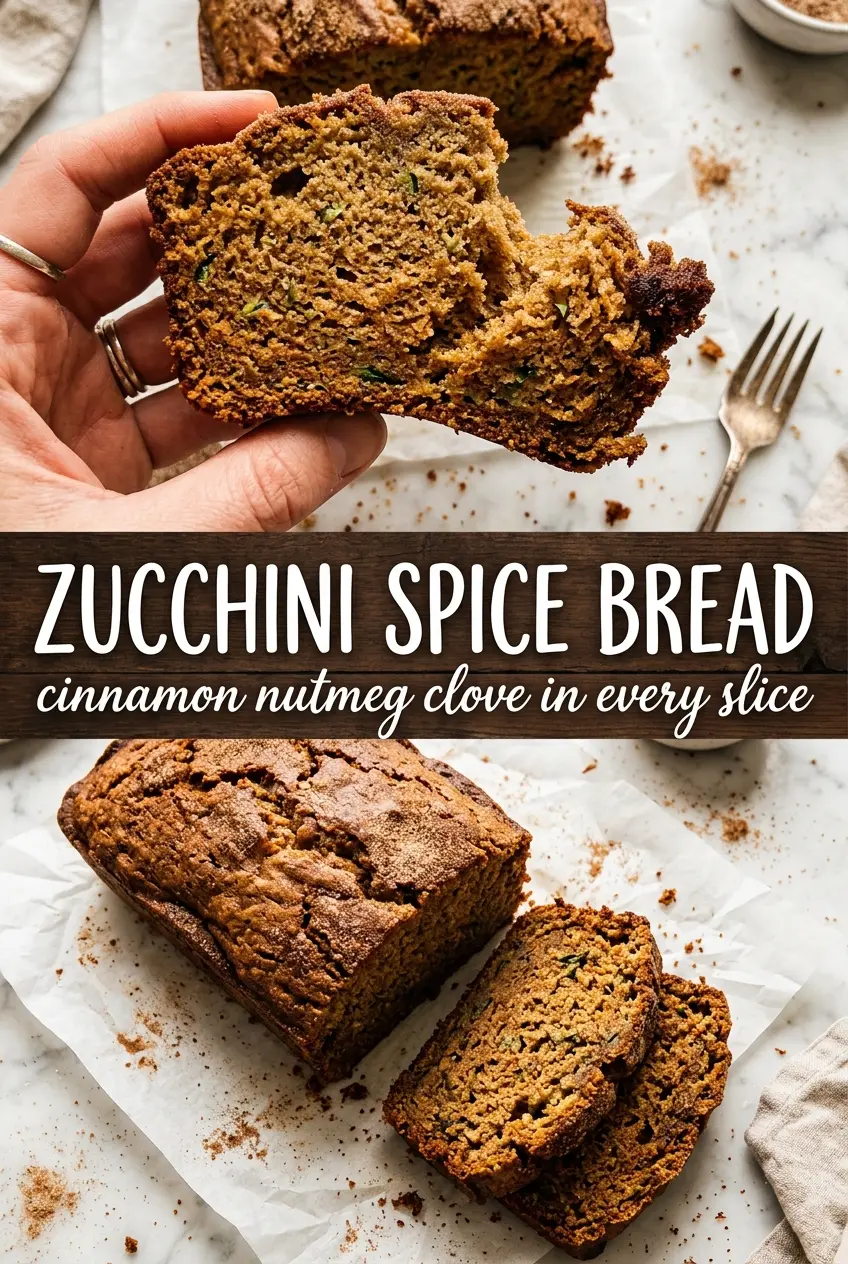
Zucchini spice bread bakes up with a soft, moist crumb and a deep brown crust that smells like cinnamon, ginger, and molasses the moment it hits the oven. The zucchini keeps the loaf tender without making it heavy, and the turbinado sugar on top adds that thin crackly lid that makes each slice worth cutting into.
This version leans into warm spice instead of letting the zucchini fade into the background. Molasses gives the loaf a darker, more rounded sweetness than plain sugar alone, and squeezing the zucchini dry keeps the crumb from turning damp or gummy. The result is a quick bread that slices cleanly, stays soft for days, and tastes even better once the spices have settled in overnight.
Below, I’ve included the small details that matter most: how dry the zucchini should be, why the batter should stay a little rough, and the storage trick that keeps each slice tasting fresh instead of stale.
The loaf rose evenly and the crumb stayed so tender, even with all the zucchini. I also loved the little crunch from the turbinado sugar on top — it made the slices feel bakery-style.
Love the warm spices and crackly sugar top on this zucchini spice bread? Save it to Pinterest for the next time you want a deeply scented loaf that stays moist for days.
The Part Most Zucchini Breads Get Wrong
The biggest mistake with zucchini bread is treating the vegetable like a flavoring instead of a source of moisture. If the zucchini goes in wet, the loaf can bake up dense in the center and slightly gummy near the bottom. Squeezing it dry before it meets the batter changes everything. You still get tenderness, but the structure stays light enough to slice cleanly.
Another thing worth watching is the spice blend. Cinnamon carries the base note, but ginger, allspice, cloves, and nutmeg give this loaf its deeper, almost chai-like warmth. That layered spice is what keeps the bread from tasting flat once the sweetness settles in.
What Each Ingredient Is Actually Doing Here
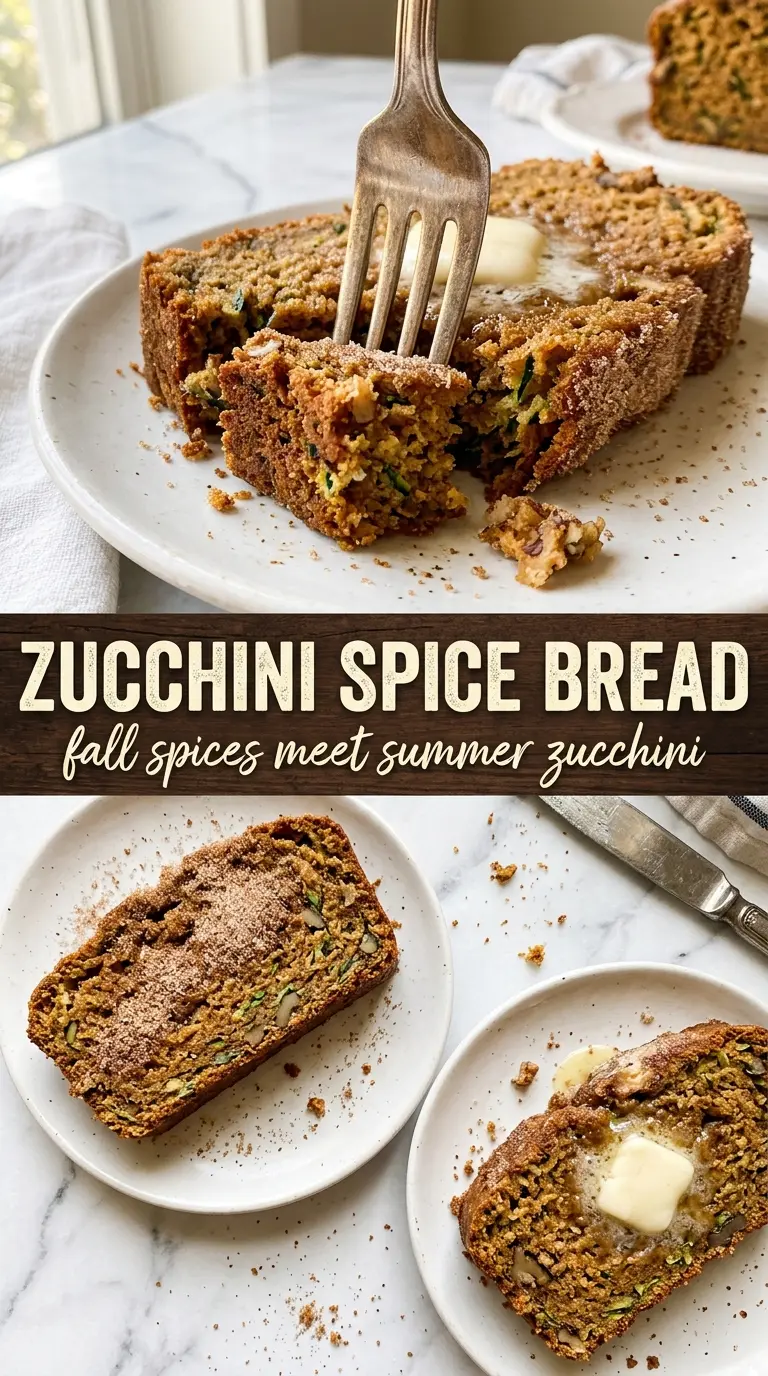
- Zucchini — Use fresh zucchini and grate it on the fine side of a box grater. After squeezing, it should feel damp, not wet. That step keeps the loaf from turning heavy, and there isn’t a substitute that gives the same tender crumb.
- Molasses — This is what gives the bread its dark, rounded sweetness and that warm bakery smell. You can swap in dark brown sugar if you need to, but the flavor gets lighter and less complex.
- Brown sugar — It adds moisture and a little caramel depth. Packed brown sugar matters here because loose sugar changes the balance of the batter.
- Vegetable oil — Oil keeps the crumb soft for days, which is exactly what you want in a quick bread. Melted butter will work, but the loaf will bake up a little firmer and dry out faster.
- Turbinado sugar — Don’t skip the top. It bakes into a crisp, crackly layer that gives the loaf texture and keeps each slice from feeling plain.
Building the Batter Without Overworking It
Whisking the Dry Ingredients First
Start by whisking the flour, leaveners, salt, and spices together until the mixture looks evenly speckled. That keeps the baking soda from clumping and spreads the spices through the loaf instead of leaving pockets of heat in one bite and none in the next. If you skip this, the bread can bake unevenly and taste patchy.
Mixing the Wet Base Until Smooth
Beat the brown sugar, eggs, oil, molasses, and vanilla until the mixture looks glossy and no streaks of egg remain. The molasses may look thick at first, but it loosens once the eggs and oil come together. This is the stage where you build a smooth base, so don’t rush it.
Folding in Zucchini and Flour
Stir the zucchini into the wet mixture first, then fold in the dry ingredients just until the last streaks of flour disappear. The batter should look thick and a little lumpy, not silky. Overmixing at this point is the fastest way to get a tight, rubbery loaf instead of a tender one.
Baking Until the Center Springs Back
Scrape the batter into the prepared pan, top it with turbinado sugar, and bake until the top is deep golden and fragrant. A toothpick should come out clean or with a few moist crumbs, not wet batter. If the top browns too fast before the center is done, lay a loose piece of foil over the loaf for the last 15 minutes.
Three Ways to Work This Loaf Into Your Routine
Make it dairy-free without changing the texture
This loaf is naturally dairy-free as written, which is one reason the crumb stays so soft. Keep the oil-based batter and you’ll get the same moist texture without needing any special swaps.
Swap part of the spice blend for pumpkin pie spice
If you’re out of individual spices, replace the cinnamon, ginger, allspice, cloves, and nutmeg with 2 1/2 to 3 teaspoons pumpkin pie spice. The loaf will taste a little rounder and less sharp, but it still lands in that warm spiced quick-bread zone.
Turn it into muffins instead of a loaf
Divide the batter among lined muffin cups and start checking at about 20 minutes. Muffins bake faster and give you more crackly sugar topping per bite, but they dry out sooner than the loaf, so they’re best the day they’re baked.
Storage and Reheating
- Refrigerator: Store tightly wrapped for up to 5 days. The crumb firms up a little in the fridge, but the flavor gets even better by day two.
- Freezer: Freeze individual slices or the whole cooled loaf well wrapped for up to 3 months. Slice first if you want easy grab-and-go portions.
- Reheating: Warm slices in a toaster oven or low oven until just heated through. The common mistake is blasting it in the microwave, which makes the crumb rubbery and kills the sugar crust.