Deep ruby cranberry sauce with a glossy finish earns its place on the table fast, especially when the flavor leans bright, boozy, and just tart enough to cut through rich holiday food. This version tastes like cranberry sauce with a little polish: port or red wine adds depth, orange juice keeps it lively, and Grand Marnier brings a clean citrus edge that lands at the end instead of cooking off.
The trick is starting with the liquid and sugar first, then adding the cranberries once the base is boiling. That gives the sauce a head start on thickness and helps the berries burst at the right pace instead of sitting in syrup too long. Stir in the orange liqueur after the pan comes off the heat so the citrus aroma stays fresh and the alcohol doesn’t cook away completely.
Below, you’ll find the small timing details that keep the sauce from turning watery, plus a few smart swaps if you want to use wine, port, or a non-alcoholic version without losing that deep, cranberry-forward finish.
The sauce thickened beautifully as it cooled, and the port gave it a deeper, almost jammy flavor without making it too sweet.
Like this boozy cranberry sauce? Save it to Pinterest for the holiday table, where that ruby gloss and citrus-spiked finish always disappear first.
The Secret to a Glossy Sauce That Thickens as It Cools
The mistake most cranberry sauces make is judging thickness too early. Hot, it looks loose and almost runny; that’s normal. As the berries burst, pectin starts working and the sauce tightens a lot more once it comes off the heat, so pull it before it looks finished in the pan or you’ll end up with something stiff after chilling.
The other thing that matters here is the order. Sugar, wine or port, orange juice, cinnamon, and salt go in first so the liquid has a chance to reduce before the cranberries release their own juice. That gives you a sauce with body instead of a thin fruit syrup.
What Each Ingredient Is Doing in This Cranberry Sauce
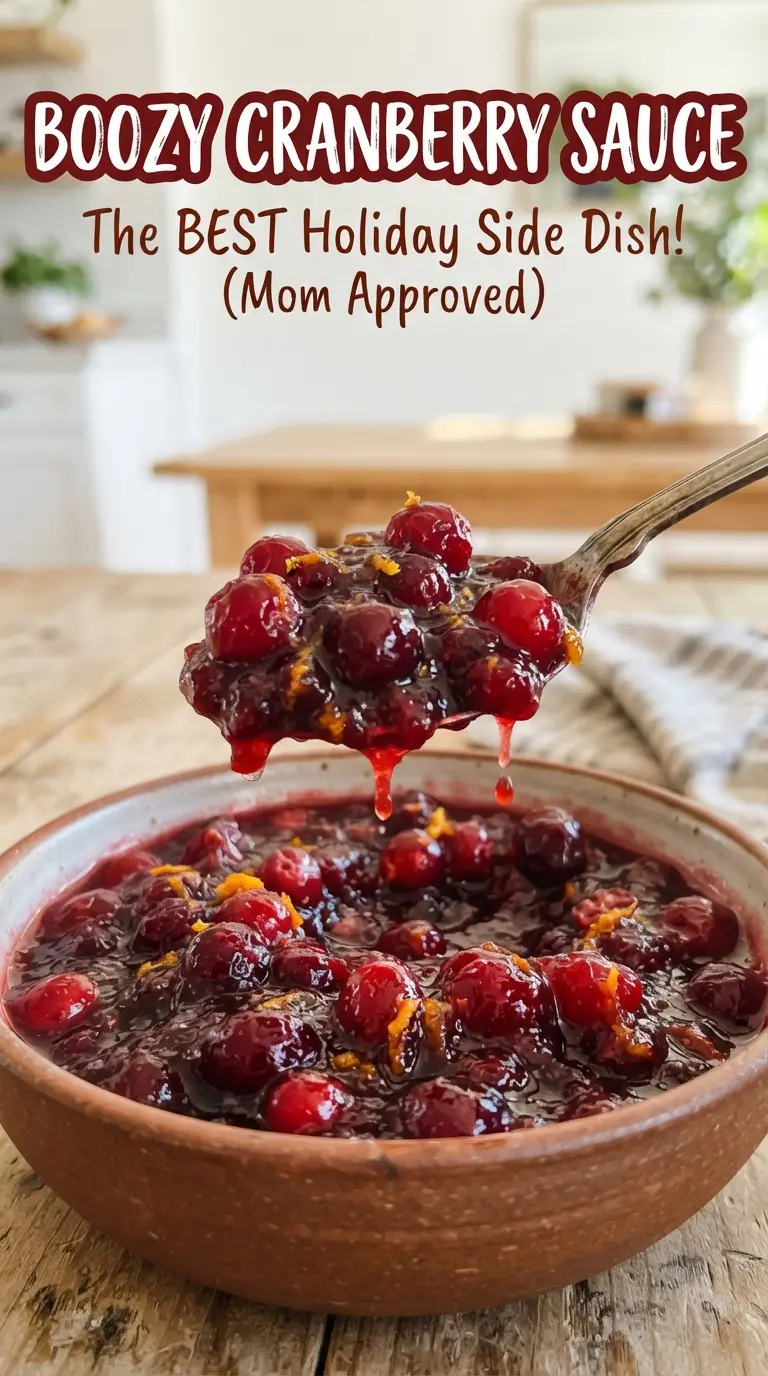
- Fresh cranberries — These bring the tart pop and natural pectin that make the sauce thicken. Frozen cranberries work too; use them straight from frozen and expect a minute or two longer on the stove.
- Ruby port or red wine — This is where the deeper, grown-up flavor comes from. Port gives a rounder, sweeter finish; red wine tastes drier and a little sharper.
- Orange juice and orange zest — The juice softens the tart cranberries, while the zest adds the bright citrus aroma at the end. Fresh zest matters more than bottled juice here because it carries the perfume that makes the sauce taste finished.
- Grand Marnier or orange liqueur — Stirring it in off the heat keeps the orange note vivid. If you skip it, the sauce still works, but you lose some of the layered citrus finish.
- Cinnamon stick — A whole stick infuses warmth without muddying the sauce the way ground cinnamon can. Remove it before chilling or the spice can take over.
Building the Sauce in the Right Order
Starting the Wine Base
Combine the sugar, port or red wine, orange juice, cinnamon stick, and salt in a saucepan, then bring it to a boil. You want the sugar dissolved and the liquid fully hot before the cranberries go in, because that helps the berries break evenly instead of floating in separate syrup. If the heat is too low, the sauce can turn mushy before it ever reduces.
Letting the Berries Burst
Add the cranberries and keep the mixture at a steady simmer for 10 to 12 minutes. You’ll hear the berries start to pop, and the sauce will move from watery to glossy and slightly jammy. Stir now and then so nothing catches on the bottom, but don’t mash every berry; leaving some whole gives you better texture.
Finishing Off Heat
Take the pan off the burner before stirring in the Grand Marnier and orange zest. That keeps the orange liqueur from cooking flat and lets the fresh zest stay bright instead of bitter. Discard the cinnamon stick, then cool the sauce before chilling; it thickens as it cools, and that final rest is part of the recipe.
How to Adjust the Flavor Without Losing the Shine
Make it non-alcoholic
Replace the port or wine with more orange juice plus an equal amount of water or cranberry juice. You’ll lose some depth, but the citrus and cranberries still make a bright, balanced sauce that works well beside rich mains.
Use red wine for a drier finish
A dry red wine makes the sauce less sweet and a little more tart, which is nice if you’re serving it with salty meats or a rich casserole. If the wine is very tannic, stick with the full orange juice amount so the sauce doesn’t turn harsh.
Make it ahead for the holidays
This sauce can be made several days in advance, and the flavor actually deepens after a night in the fridge. It’s one of those dishes that tastes better after it settles, which makes it a rare holiday side you can cross off early.
Storage and Reheating
- Refrigerator: Store in a sealed container for up to 1 week. It will set up more firmly as it chills.
- Freezer: It freezes well for up to 2 months. Thaw overnight in the fridge and stir before serving.
- Reheating: Warm gently on low heat if you want it loosened for serving. Don’t boil it hard again or the texture can go from glossy to paste-like.
Questions I Get Asked About This Recipe
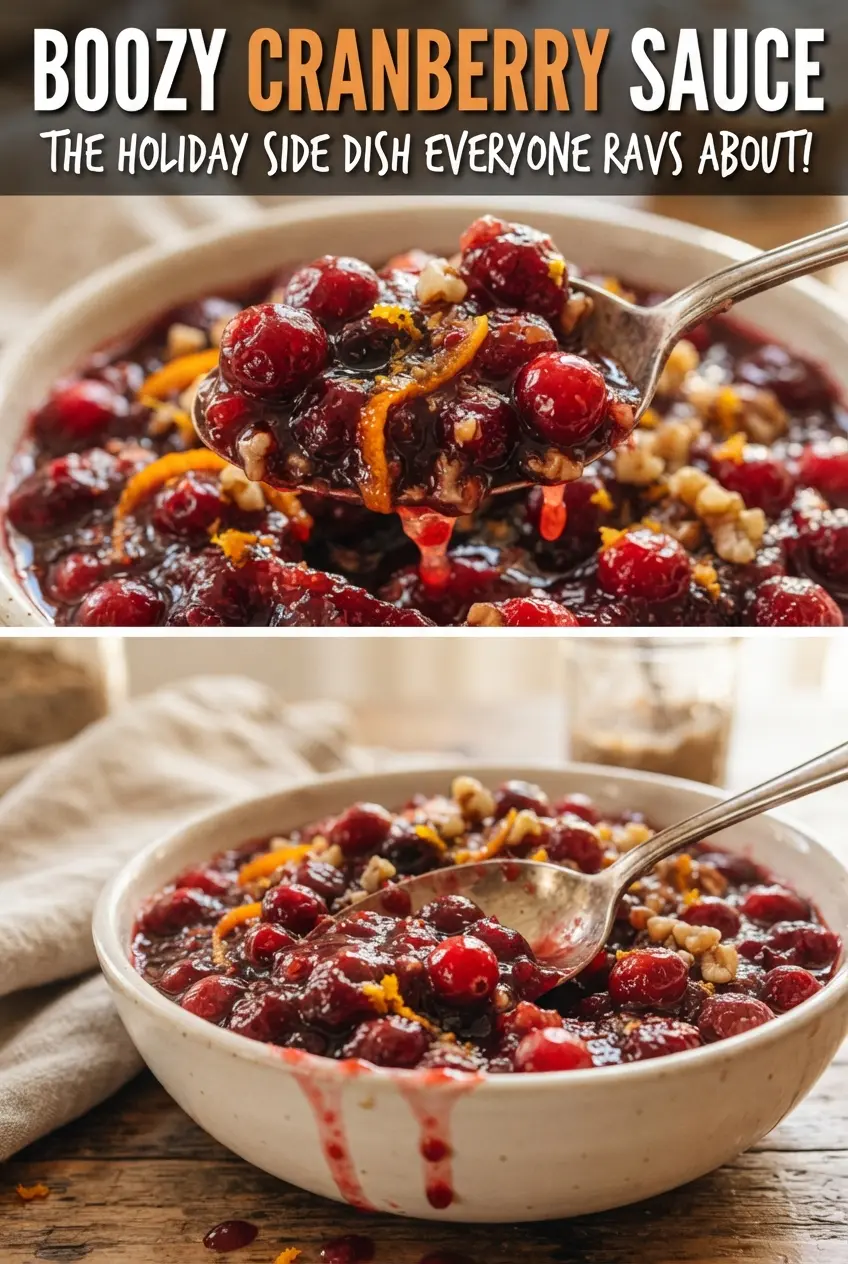
Boozy Cranberry Sauce
Ingredients
Equipment
Method
- In a saucepan, combine sugar, ruby port or red wine, orange juice, cinnamon stick, and salt, then bring to a boil over medium-high heat with a glossy bubbling surface (about 2–3 minutes).
- Add fresh cranberries, then reduce to a steady simmer and cook for 10–12 minutes until the berries burst and the sauce thickens, with occasional thickened trails when stirred.
- Remove from heat and stir in Grand Marnier or orange liqueur and orange zest, creating a deeper ruby color and a bright citrus aroma.
- Discard the cinnamon stick, leaving the sauce smooth and evenly speckled with berry skins.
- Cool to room temperature for 15–20 minutes, then chill until set before serving, which gives it a spoonable, gelled texture.