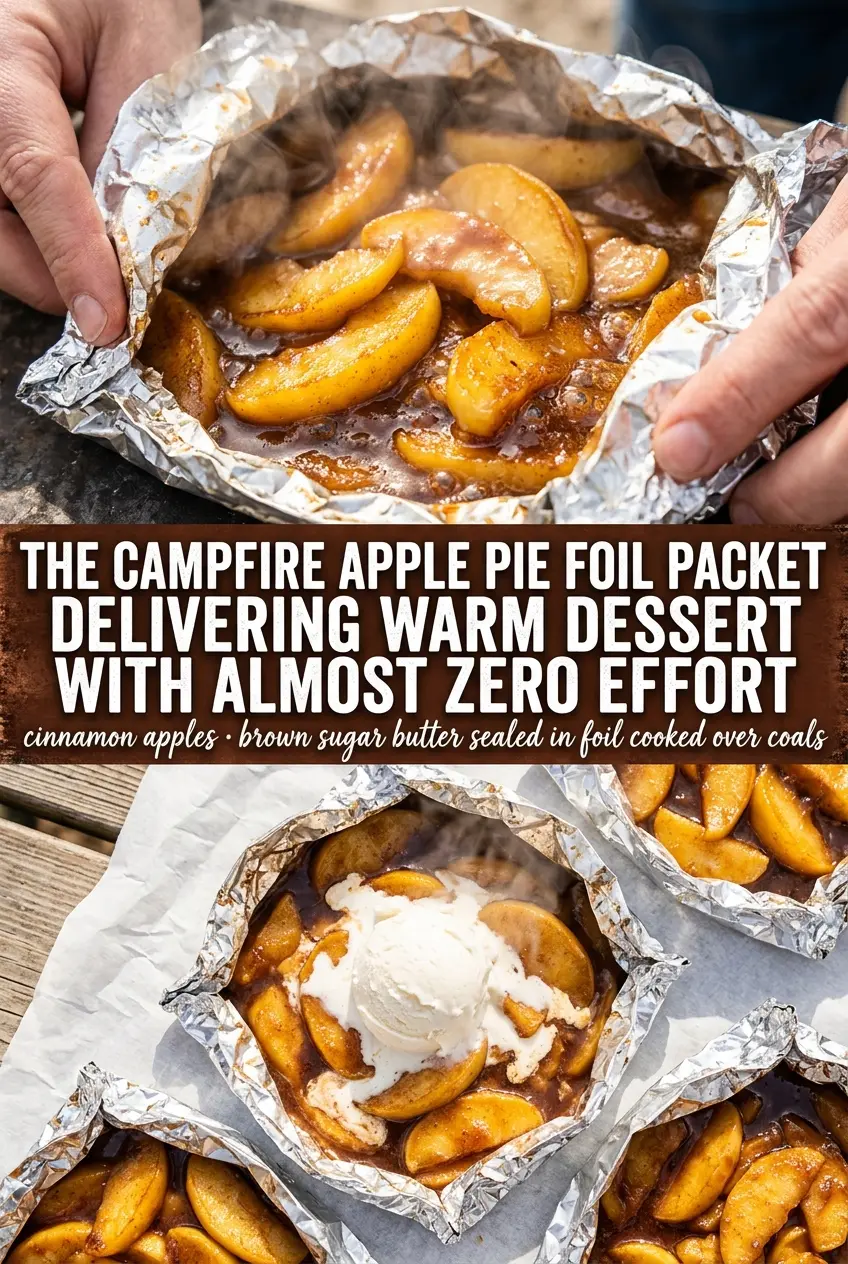
Campfire apple pie packets land with that mix of smoky, buttery, cinnamon-spiced apples and a crumbly topping that tastes like pie without the work of rolling dough. The foil does the heavy lifting here: it traps steam so the apples turn tender and glossy, and it keeps the sugars and butter mingling into a sauce instead of running off into the fire.
What makes this version work is the balance. The apples need enough time to soften, but not so much that they collapse into applesauce, and the graham cracker crumbs go in dry so they hold onto some texture instead of dissolving. Heavy-duty foil matters more than people think, because thin foil tears when the sugar starts bubbling and the packet gets moved around the grate.
Below, I’ve included the little details that keep the packets sealed, the apples evenly cooked, and the topping from turning soggy before you get to the table. If you’ve ever had a camp dessert leak all over the coals, this one solves that problem.
The apples came out tender and the juices thickened into this cinnamon syrup inside the packet. I was worried the graham cracker topping would get mushy, but it stayed crumbly enough to taste like actual pie crust.
Campfire Apple Pie Packets for tender cinnamon apples, a crumbly graham topping, and the easiest dessert to pull off over the fire.
The Part That Keeps the Apples Tender Instead of Watery
The biggest mistake with foil-packet desserts is overloading them with liquid. Apples release enough juice on their own, and the butter and sugar turn that into a syrup as they cook. If you start with extra liquid, the filling turns thin and the crumbs go soft before the apples are done.
Cut the apples into even slices so they finish at the same time. Thick wedges stay hard in the middle while the thin ones break down early, which is how you end up with mixed textures in the same packet. The goal is tender apples that still hold their shape when you open the foil.
What the Ingredients Are Doing Inside the Packet
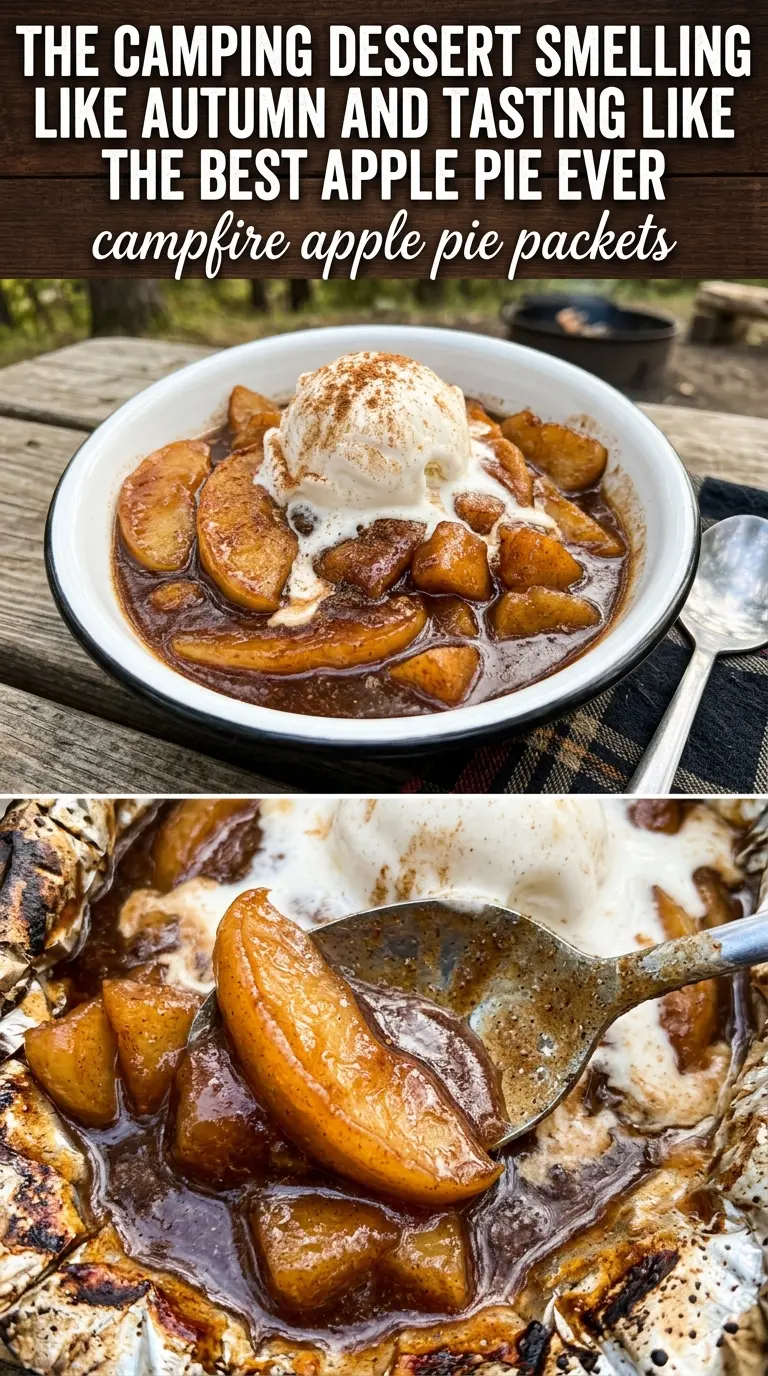
- Apples — Firm baking apples work best because they hold their shape under heat. A mix of tart and sweet apples gives you a deeper pie flavor, but any sturdy variety will work better than a soft snacking apple.
- Brown sugar — This melts into the apple juices and gives the filling that caramel edge. White sugar works in a pinch, but it tastes flatter and won’t give you the same depth.
- Cinnamon and nutmeg — Cinnamon does the obvious work, but nutmeg makes the filling taste more like pie and less like spiced fruit. Don’t overdo the nutmeg; a little goes a long way.
- Butter — The butter coats the apples and helps the sugar turn silky instead of grainy. If you use margarine, the filling tastes thinner and less rounded.
- Graham cracker crumbs — These replace pie crust here and give you that familiar sweet, toasty finish. Keep them on top so they stay a little crumbly instead of soaking straight into the juices.
- Heavy-duty foil — This is one ingredient you don’t want to cheap out on. Thin foil can split when the packets are moved or when the sugar bubbles hard at the edges.
How to Build the Packets So They Cook Evenly
Layering the Apples First
Divide the apple slices evenly among the foil sheets and keep them in a loose mound in the center. That shape gives the steam room to circulate and keeps the filling from spreading too thin across the packet. If the apples are packed into a flat layer, the bottom softens too fast while the top stays firm.
Adding the Sugar and Spice
Sprinkle the brown sugar, cinnamon, and nutmeg over the apples before adding the butter. The sugar starts pulling juice from the apples right away, which helps create the sauce as the packet heats up. Stir the apples gently if needed so the seasoning isn’t all sitting in one corner.
Sealing for Steam, Not Leaks
Fold the foil tightly and crimp the edges well so the steam stays inside. Leave a little space above the fruit for expansion, because the bubbling juices need room or they can force the seal open. If a packet looks loose before it hits the heat, it will leak on the grate.
Cooking Over the Grate
Set the packets over medium heat for 12 to 15 minutes, then check for tender apples by carefully opening one packet away from your face. You want the fruit soft enough to pierce easily with a fork but not falling apart. If the fire is too hot, the edges scorch before the center softens, so keep the heat moderate and move the packets if one side starts to brown too fast.
The Cooling Window Before Serving
Let the packets rest for 5 minutes before opening them all the way. The filling is scorching hot right off the grate, and that short rest lets the juices thicken a little so the dessert eats like pie instead of soup. Top with vanilla ice cream once the steam settles, not before, or it melts into the packet immediately.
Three Ways to Make These Foil Packets Fit the Moment
Make them dairy-free
Swap the butter for a plant-based stick butter. You’ll still get richness and a little gloss on the apples, though the filling won’t taste quite as round as it does with dairy butter.
Make them gluten-free
Use certified gluten-free graham-style crumbs if you can find them. The topping still gives you that pie-like finish, and the rest of the recipe already works without any flour.
Add a caramel note
Stir a spoonful of caramel sauce into the apples before sealing the packets. That gives you a richer, stickier filling, but it also makes the sauce sweeter, so the apples work best if you use a tart variety.
Batching for a crowd
You can assemble the packets a few hours ahead and keep them chilled until grill time. Hold off on adding the crumbs if you want the topping a little crisper, then sprinkle them on just before sealing.
Storage and Reheating
- Refrigerator: Store leftover packets in an airtight container for up to 3 days. The crumbs soften as they sit, but the flavor stays good.
- Freezer: Not ideal once cooked, since the apples turn softer after thawing. You can freeze the assembled uncooked packets for up to 1 month, then cook from thawed or partially thawed.
- Reheating: Warm the opened filling in a covered skillet over low heat or in a 300°F oven until heated through. High heat dries out the apples and turns the topping hard instead of crumbly.