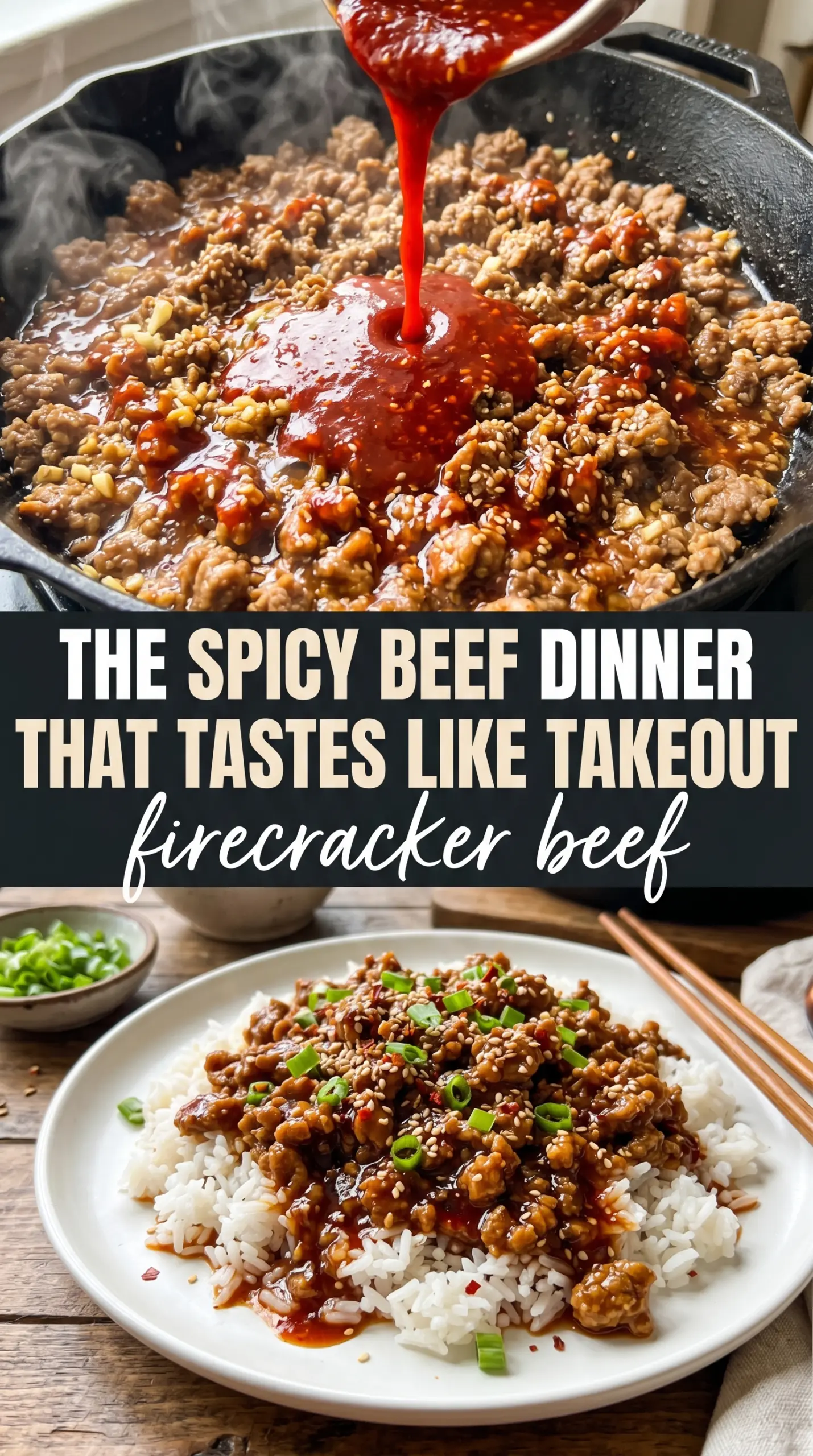
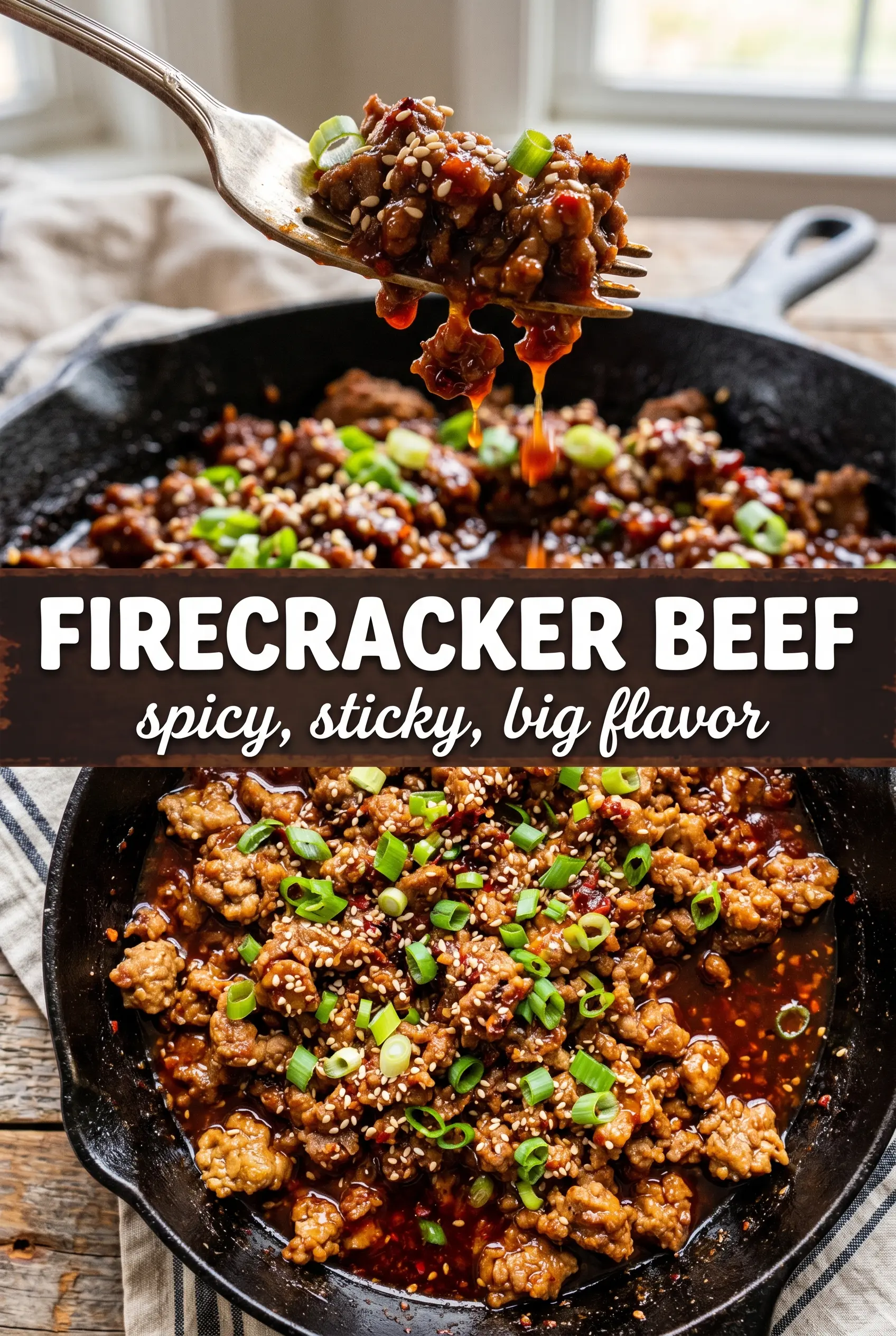
Firecracker beef hits the pan fast and leaves behind sticky, glossy bits of sauce that cling to every crumble of beef. The sweet heat settles in without turning harsh, and the browned edges keep each bite from tasting one-note. Piled over rice, it eats like a takeout bowl that came together in one skillet and never needed a second thought.
The trick is giving the beef time to brown before the sauce goes in. If you rush that part, you get soft, steamed meat instead of the caramelized, craggy texture that makes this dish worth making. The sauce itself balances sriracha, honey, soy, and vinegar, so it starts bold, then lands with just enough sweetness and tang to keep the heat in check.
Below, you’ll find the small details that keep the sauce from scorching and the beef from turning greasy. I’ve also included the swaps I use when I want it milder, gluten-free, or stretched a little farther for leftovers.
The sauce thickened up in just a couple minutes and coated the beef perfectly. I served it over jasmine rice and my husband asked if we could keep this in the rotation every week.
Save this firecracker beef for the nights when you want sticky, spicy beef over rice with almost no cleanup.
The Reason the Beef Stays Sticky Instead of Soupy
The difference between good firecracker beef and greasy disappointment comes down to heat management. The skillet needs to be hot enough to brown the beef quickly, but the sauce should only go in after the meat is cooked through and the fat is drained. That way the sugars in the honey and brown sugar can caramelize on contact instead of dissolving into the pan juices.
Another easy mistake is crowding the beef and stirring too soon. Let it sit long enough to pick up browned edges before breaking it apart completely. Those little crispy bits catch the sauce and give you that takeout-style texture instead of a soft, boiled finish.
- Ground beef — An 85/15 or 90/10 blend works best because it browns without flooding the pan. Leaner beef can work, but it needs a touch more oil and a careful eye so it doesn’t dry out.
- Sriracha — This gives the sauce its heat and its garlicky backbone. Another chili sauce will change the flavor, but sriracha is the cleanest swap if you want that classic sweet-heat balance.
- Honey and brown sugar — They do different jobs here. Honey gives shine and body, while brown sugar pushes the sauce toward sticky caramelization; don’t skip one unless you plan to replace the lost texture with a longer reduction.
- Rice vinegar — This keeps the sauce from tasting flat or candy-sweet. Lime juice works in a pinch, but it brings a brighter finish and less rounded tang.
- Sesame oil — A small amount matters. It doesn’t make the dish taste sesame-heavy; it just adds that nutty depth that makes the sauce taste finished.
What Each Ingredient Is Actually Doing in This Recipe
- Primary ingredient (the star) — Quality matters most. Choose the best you can find.
- Cooking medium (oil, butter, or broth) — This carries flavors and prevents dryness.
- Seasonings (salt, pepper, spices, herbs) — Layer flavors so nothing overpowers. Build depth gradually.
- Aromatics (garlic, onion, herbs) — Cook with fat to bloom flavors. Become the foundation.
- Supporting ingredients — Complement the main ingredient without overpowering it.
- Sauce or liquid (if applicable) — Brings flavors together. Balance richness with acid.
- Acid (lemon, vinegar, wine, or other) — Brightens and prevents flat-tasting results.
- Final finish (garnish, glaze, or sauce) — Prevents one-dimensional taste and adds visual appeal.
Building the Sauce So It Clings to Every Bite
Whisk the sauce before the heat goes on
Mix the sriracha, honey, soy sauce, rice vinegar, brown sugar, sesame oil, and red pepper flakes until the sugar starts dissolving. If you pour the components in separately, the honey sinks and the sugar can scorch before it blends in. A smooth sauce coats the beef more evenly and reduces faster.
Brown the beef hard, then drain the fat
Cook the beef in a hot skillet and leave it alone long enough to get real color. You want browned crumbles and crisp edges, not pale meat simmering in its own moisture. If there is a lot of fat in the pan, drain it off before the garlic goes in or the finished sauce will slide off instead of sticking.
Bloom the garlic and ginger for only a few seconds
Add the garlic and ginger after the fat is drained and cook just until fragrant, about 30 seconds. If they sit too long, garlic turns bitter fast in a hot skillet and that bitterness carries into the sauce. The second you smell them clearly, move on to the sauce.
Reduce until glossy and tight
Pour the sauce over the beef and toss constantly for 2 to 3 minutes. At first it will look loose and a little thin, then it turns darker, shinier, and starts clinging to the meat in a lacquered layer. If the pan is too cool, it stays runny; if it is too hot, the sugars can catch and burn, so keep the heat at a lively medium-high once the sauce is in.
Make it milder without losing the sticky glaze
Cut the sriracha back to 1 or 2 tablespoons and leave the rest of the sauce alone. You still get the shine and the sweet-salty balance, just with heat that sits in the background instead of taking over the bowl.
Make it gluten-free
Swap the soy sauce for tamari or a certified gluten-free soy sauce. The flavor stays close, and the sauce still reduces the same way, so you won’t lose the sticky finish.
Stretch it for extra servings
Stir in a handful of thinly sliced bell pepper, shredded carrot, or steamed broccoli right before the sauce finishes reducing. The vegetables catch the glaze and help the beef go farther without changing the core flavor.
Make it low-carb
Serve it over cauliflower rice instead of white rice and use a low-carb sweetener in place of the brown sugar if needed. The sauce won’t be quite as deeply caramelized, but it still clings well and delivers the same sweet-spicy hit.
Storage and Reheating
- Refrigerator: Store in an airtight container for up to 4 days. The sauce tightens as it chills, which actually helps the flavor.
- Freezer: It freezes well for up to 2 months. Cool it completely first, then freeze in a flat container or freezer bag so it reheats evenly.
- Reheating: Warm it in a skillet over medium-low heat with a splash of water to loosen the glaze. Microwaving works, but use short bursts so the sugars don’t turn the beef dry around the edges.
Questions I Get Asked About This Recipe
Firecracker Beef
Ingredients
Equipment
Method
- Whisk together sriracha, honey, soy sauce, rice vinegar, brown sugar, sesame oil, and red pepper flakes until smooth, then set aside.
- Heat vegetable oil in a large skillet over high heat, then add ground beef and cook while breaking it apart until browned with crispy edges, 6–10 minutes; drain excess fat.
- Add garlic and ginger and cook for 30 seconds, stirring to prevent burning.
- Pour firecracker sauce over the beef and toss to coat, then cook 2–3 minutes until the sauce reduces and caramelizes around the beef.
- Serve the caramelized firecracker beef over steamed white rice.
- Garnish generously with green onions and sesame seeds.