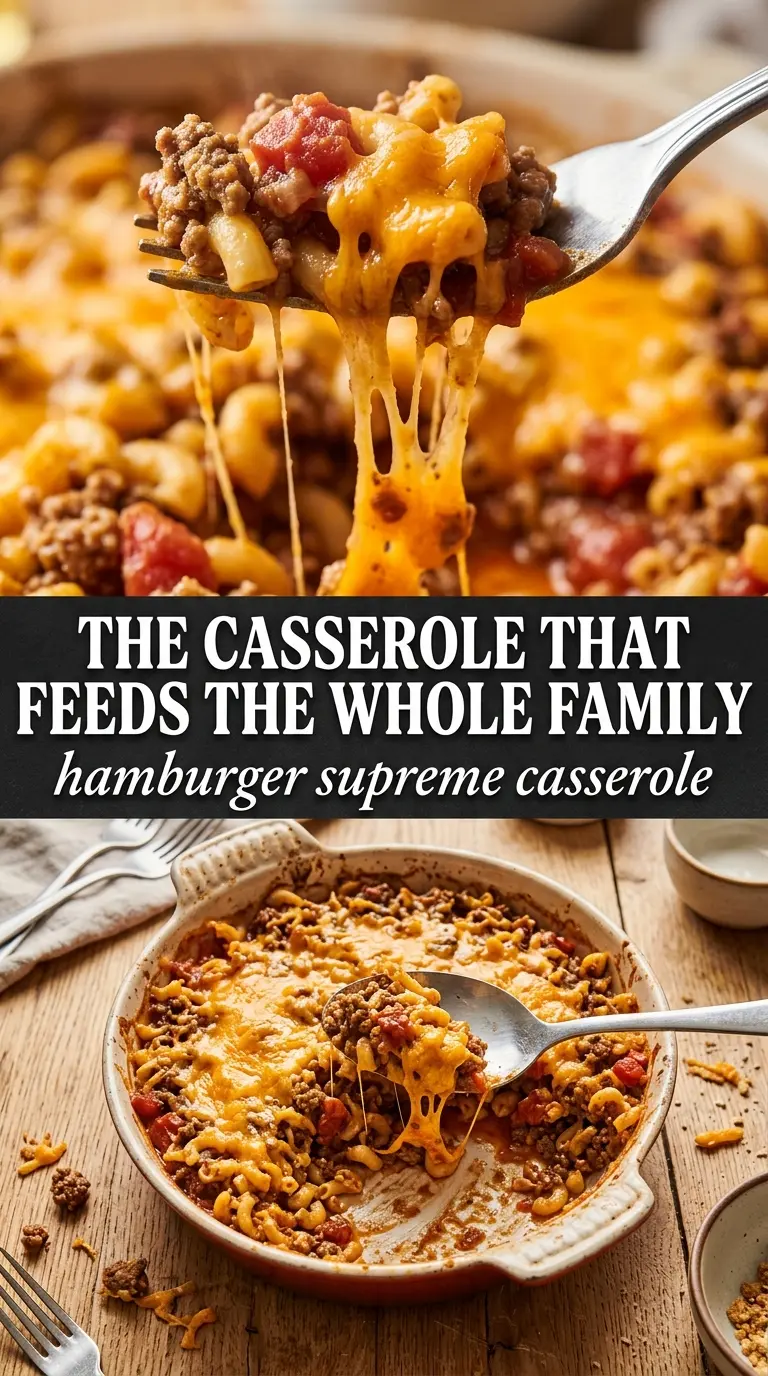
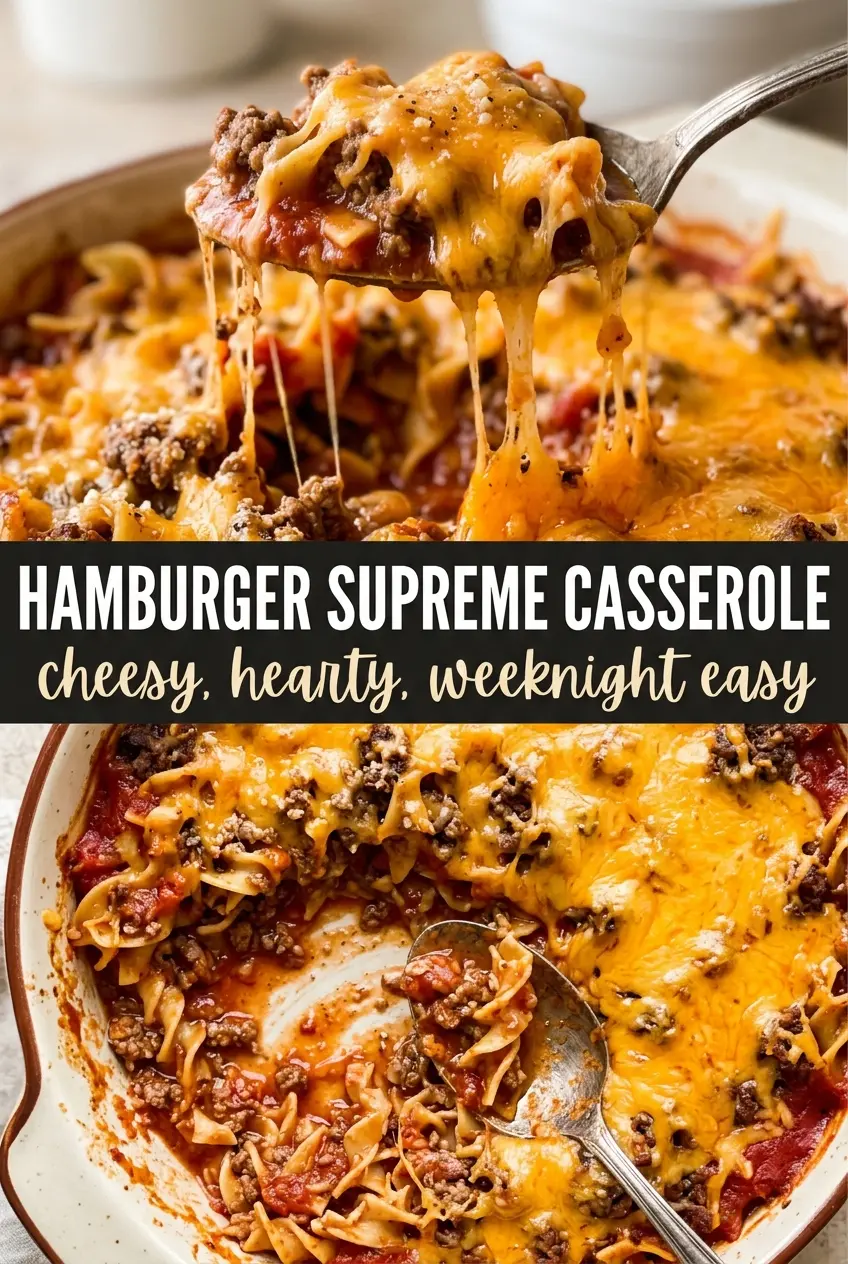
Hamburger Supreme Casserole bakes into one of those dinners that disappears fast because every forkful hits the same comforting notes: savory beef, tangy creaminess, tender noodles, and a golden cheddar top that cracks just a little when you scoop through it. It’s rich without feeling heavy, and the layers hold together in a way that makes each serving look as good as it tastes.
What makes this version work is the balance. The beef simmers briefly with tomato sauce, Worcestershire, and Italian seasoning so it tastes seasoned all the way through instead of just browned on the surface. The noodle layer gets coated with cream cheese and sour cream, which keeps it from drying out in the oven and gives the casserole that “supreme” texture people remember after the first bite.
Below you’ll find the small details that matter here: how to keep the sauce thick, why the noodles should be fully drained, and the one rest time that keeps the casserole from sliding apart when you serve it.
The noodles stayed creamy all the way through and the cheddar formed that perfect browned top without drying out the middle. I served it after a 5-minute rest and it sliced cleanly instead of turning into a pile.
Save this Hamburger Supreme Casserole for the nights when you want a creamy beef-and-noodle bake with a golden cheddar crust.
The Reason the Creamy Layer Stays Rich Instead of Turning Gluey
The part that trips people up in casseroles like this is the middle layer. If the noodles go in dry, or if the cream cheese is still cold and lumpy, the bake can turn uneven fast. Here, the cream cheese and sour cream are beaten together first so they melt into a smooth coating that clings to the noodles instead of sitting in separate streaks.
The beef layer matters just as much. Let the tomato sauce simmer for those five minutes after you add the seasoning and Worcestershire. That short simmer takes the raw edge off the sauce and lets it thicken enough to sit on top of the noodles without flooding the pan.
- Egg noodles — These hold the creamy sauce well and stay tender after baking. Cook them just to al dente, then drain them thoroughly so extra water doesn’t thin the casserole.
- Cream cheese and sour cream — This is what gives the casserole its signature richness. Softened cream cheese is non-negotiable here; cold cream cheese won’t blend smoothly and can leave little pockets in the baked dish.
- Cheddar — A medium or sharp cheddar both work. Sharp gives you more punch, while medium melts a touch smoother. Pre-shredded is fine, but freshly shredded melts into a cleaner crust.
- Worcestershire sauce — It adds the savory depth that keeps the beef layer from tasting flat. There isn’t a perfect substitute, but a small splash of soy sauce can stand in if that’s what you have.
What Each Ingredient Is Actually Doing in This Recipe
- Primary ingredient (the star) — Quality matters most. Choose the best you can find.
- Cooking medium (oil, butter, or broth) — This carries flavors and prevents dryness.
- Seasonings (salt, pepper, spices, herbs) — Layer flavors so nothing overpowers. Build depth gradually.
- Aromatics (garlic, onion, herbs) — Cook with fat to bloom flavors. Become the foundation.
- Supporting ingredients — Complement the main ingredient without overpowering it.
- Sauce or liquid (if applicable) — Brings flavors together. Balance richness with acid.
- Acid (lemon, vinegar, wine, or other) — Brightens and prevents flat-tasting results.
- Final finish (garnish, glaze, or sauce) — Prevents one-dimensional taste and adds visual appeal.
Building the Casserole So Every Bite Stays Balanced
Cooking the Beef Until the Pan Starts to Brown
Brown the ground beef with the onion over medium-high heat until the meat loses its pink color and the onion turns soft and translucent. You want some browned bits on the bottom of the pan; that’s where the flavor lives. If the pan is crowded with liquid, keep cooking until it evaporates and the meat starts to sizzle again. Drain the fat before adding the garlic so the sauce doesn’t turn greasy.
Turning the Meat into a Sauce, Not Just a Filling
Add the garlic, tomato sauce, Italian seasoning, Worcestershire, salt, and pepper, then simmer for about five minutes. The sauce should look glossy and slightly thickened, not watery. If it still looks loose, let it cook another minute or two uncovered. That little bit of reduction keeps the casserole from pooling at the bottom of the dish.
Coating the Noodles Without Breaking Them
Beat the cream cheese and sour cream until smooth before you add the noodles. Fold the noodles in gently so they get coated without being smashed. You’re looking for a creamy, even mixture that still has some structure. If the noodles were warm from cooking, this step goes faster and the mixture spreads more easily in the baking dish.
Finishing Under the Cheese
Spread the noodle mixture evenly in the baking dish, spoon the beef sauce over the top, then cover everything with cheddar. The cheese should blanket the surface all the way to the edges so the casserole browns evenly instead of drying out in patches. Bake uncovered until the cheese is melted, spotted golden, and the edges are bubbling. Let it rest for five minutes before serving so the layers settle and hold together.
How to Adapt This for a Smaller Pan, a Lighter Version, or a Different Pasta
Make it gluten-free
Swap in your favorite gluten-free egg-style pasta and cook it just until tender. The rest of the casserole stays the same, but drain the pasta well because gluten-free noodles can release extra moisture after cooking. The texture will still be creamy, though the pasta may soften a little more after baking.
Use ground turkey instead of beef
Ground turkey works well if you want a lighter casserole, but it needs a little help in the flavor department. Add an extra pinch of salt and a touch more Worcestershire so the sauce doesn’t taste flat. Because turkey is leaner, watch the pan closely and don’t let it dry out before the tomato sauce goes in.
Swap the egg noodles for rotini or penne
Short pasta works if that’s what’s in the pantry, but choose a shape with ridges or curves so the creamy layer grabs onto it. Penne gives a firmer bite, while rotini traps more of the sauce in its spirals. Cook either one just shy of done so it doesn’t go soft in the oven.
Make it ahead and bake later
You can assemble the casserole up to a day in advance and refrigerate it before baking. Let it sit at room temperature while the oven preheats so the center isn’t ice-cold, and add a few extra minutes in the oven if needed. If the top starts to brown too quickly, cover it loosely with foil for the last stretch.
Storage and Reheating
- Refrigerator: Store covered for up to 4 days. The noodles will firm up as they chill, but the flavor holds well.
- Freezer: This casserole freezes well after baking. Cool it completely, wrap it tightly, and freeze for up to 2 months. Thaw overnight in the fridge before reheating.
- Reheating: Warm portions covered in the oven at 325°F until hot, or microwave individual servings with a splash of water to loosen the sauce. The biggest mistake is blasting it too hot for too long, which dries out the noodles and separates the cheese.
Questions I Get Asked About This Recipe
Hamburger Supreme Casserole
Ingredients
Equipment
Method
- Preheat the oven to 350°F and grease a 9x13 baking dish.
- Brown the ground beef with diced onion, then drain the fat.
- Stir in the minced garlic and cook for 30 seconds.
- Add tomato sauce, Italian seasoning, Worcestershire sauce, salt, and pepper, then simmer for 5 minutes.
- Beat the softened cream cheese with sour cream until smooth.
- Fold in the cooked and drained egg noodles.
- Spread the noodle mixture in the prepared baking dish.
- Pour the beef tomato sauce over the noodle layer.
- Scatter the shredded cheddar cheese over everything.
- Bake uncovered for 30–35 minutes at 350°F until the cheese is golden and the casserole is bubbling.
- Let the casserole rest 5 minutes before serving.