Hobo dinner cheeseburgers give you the best parts of a cheeseburger and a full foil packet meal in one grab-and-go dinner. The beef stays juicy, the potatoes turn tender underneath the patty, and the cheese melts right over the top at the end instead of disappearing into the foil. When the packets come off the heat, the vegetables underneath have picked up all the drippings and butter, which is what makes this version taste like more than just a burger wrapped in foil.
The trick is building the packet in the right order. Thin potatoes go on the bottom so they have enough time to soften, and the burger goes on top where it can steam and sear a little from the heat trapped inside the foil. I also use heavy-duty foil and seal it well, because a bad seal is the fastest way to lose steam, dry out the beef, and end up with crunchy potatoes.
Below you’ll find the small timing details that matter, plus a few smart swaps if you’re cooking these over a campfire, grill grate, or even in the oven when the weather doesn’t cooperate.
The potatoes were perfectly tender and the cheese melted right on top without making the whole packet soggy. I loved that the burgers stayed juicy over the campfire and dinner was all in one foil packet.
Save these foil packet hobo dinner cheeseburgers for the nights when you want melty burgers, tender vegetables, and almost no cleanup.
The Packet Order That Keeps the Potatoes Tender Instead of Crunchy
Foil packet dinners fail when the ingredients are stacked in the wrong order. Potatoes need the most time, so they belong closest to the heat and cut thin enough to soften in the same window as the beef. If they’re sliced too thick, the burger will be cooked before the potatoes ever turn tender, and you’ll end up opening a packet with a finished patty and hard vegetables underneath.
The other thing that matters is steam. Once the foil is sealed, the vegetables and butter create a hot little oven around the meat, which is why these cook evenly over medium heat instead of screaming-hot flames. Medium heat gives the potatoes time, keeps the beef juicy, and lowers the chance that the foil burns through before dinner is done.
- Thin potatoes — They’re the slowest ingredient in the packet, so slice them as thin and even as you can. A mandoline makes this easy, but a sharp knife works fine if you keep the slices uniform.
- Heavy-duty foil — This isn’t the place for thin, flimsy foil. You need a strong packet that can hold steam and flip without tearing.
- Butter — The butter adds moisture and helps season the vegetables as they cook. Margarine works in a pinch, but it won’t give the same rich finish.
What Each Ingredient Is Doing Once the Foil Seals
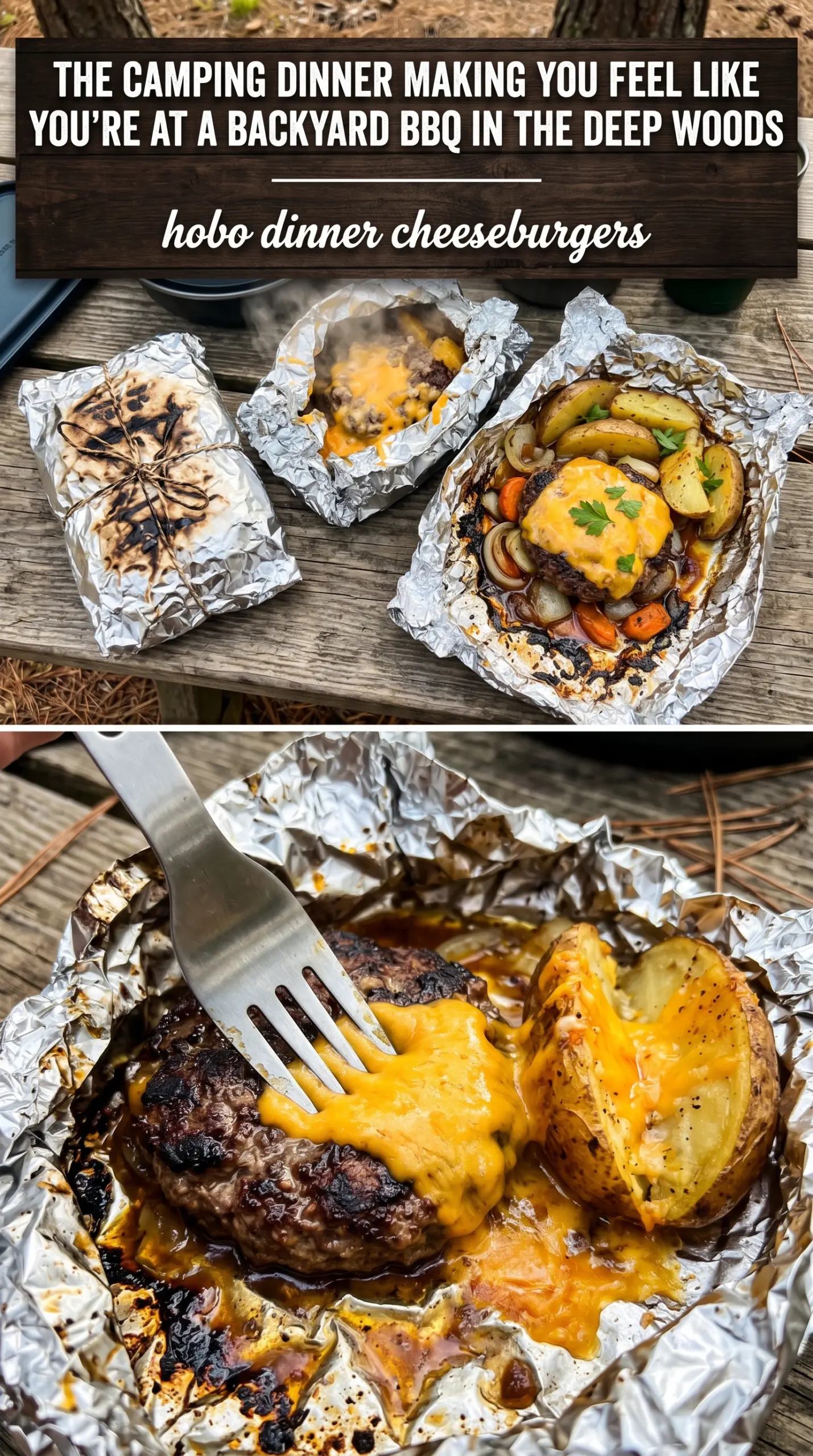
- Ground beef — Use regular ground beef, not extra-lean. A little fat keeps the burger from drying out while it steams inside the packet.
- American cheese — It melts smoothly and clings to the burger instead of turning grainy. If you swap in cheddar, slice it thin so it melts before the packet cools down.
- Onion and bell pepper — These soften and season the drippings under the burger. Slice them thin enough that they cook in the same time as the potatoes.
- Salt and pepper — Season the beef before it goes in the packet. Once everything is sealed, the flavor concentrates, so you don’t need much more than a good, even seasoning at the start.
Building the Packets So Nothing Overcooks
Season and Shape the Patties
Form the beef into four thin patties, a little wider than you think you need because they shrink as they cook. Season both sides with salt and pepper before they go on the foil. Thin patties cook through at the same pace as the vegetables underneath, while thick burgers tend to leave the potatoes behind. If the meat looks packed tight, loosen it gently with your fingers so it stays tender instead of dense.
Layer the Vegetables First
Spread the sliced potatoes, onions, and bell peppers on each foil sheet, keeping the potatoes in the main contact area with the foil. The vegetables should sit in a loose bed, not a mound, so steam can move through the packet. Put the burger on top, then add the butter right over the meat and vegetables. That little bit of fat melts down through everything and keeps the packet from tasting dry.
Seal, Flip, and Finish with Cheese
Fold the foil tightly so the packets are sealed but not smashed flat. Set them on a campfire grate or over medium heat for 20 to 25 minutes, then flip once halfway through so the bottom doesn’t scorch. Open carefully when the packets are hot and steamy, add the cheese slices to the burgers, then close the foil for a minute or two until the cheese goes soft and glossy. If the packets leak, the potatoes dry out first, so keep the seams crimped well.
Let the Steam Settle Before Serving
Give the packets about 5 minutes to cool before opening and serving. That resting time lets the juices settle back into the beef and keeps the steam from blasting out the second you tear the foil. If you open them too soon, the burger can look a little loose and the vegetables will be scorching hot. Serve straight from the packets for the easiest cleanup.
How to Adjust These Foil Packet Burgers for a Grill, Oven, or Dairy-Free Plate
Oven-Baked Version for Rainy Nights
Bake the sealed packets on a sheet pan at 400°F for about 25 to 30 minutes. The timing is similar, but the oven gives you steadier heat and slightly more even potato cooking. You’ll still want to open the packets at the end and add the cheese for the last minute or two so it melts cleanly.
Dairy-Free Swap That Still Tastes Rich
Use olive oil or plant-based butter instead of dairy butter, then skip the cheese or use a dairy-free slice that melts well. You lose a little of the classic cheeseburger finish, but the packet still has enough fat from the beef and oil to keep the vegetables from tasting flat.
How to Make It Heartier for Hungry Campers
Add sliced mushrooms or a handful of corn kernels to the vegetable layer. Mushrooms bring extra moisture and a deeper savory note, while corn adds sweetness and texture without changing the cooking time much. Keep the layer thin so the packet still heats evenly.
Storage and Reheating
- Refrigerator: Store leftovers in an airtight container for up to 3 days. The potatoes soften a bit more as they sit, but the flavor holds up well.
- Freezer: These packets don’t freeze well once cooked because the potatoes turn grainy and watery after thawing. Freeze the uncooked seasoned patties separately if you want to get ahead.
- Reheating: Reheat in a covered skillet over low heat with a splash of water, or warm in a 350°F oven until hot. High heat dries out the beef fast and makes the potatoes tough around the edges.
Questions I Get Asked About This Recipe
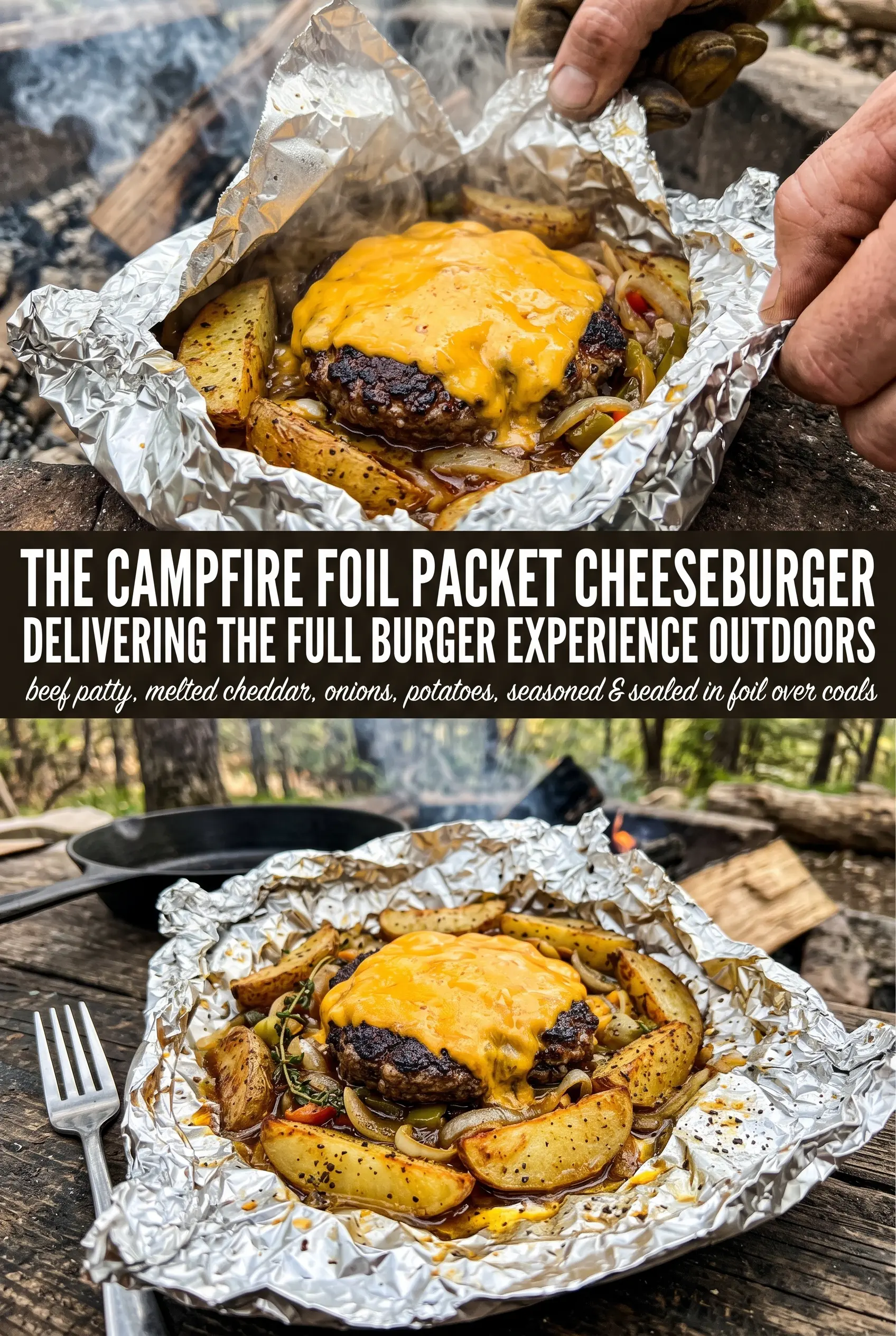
Hobo Dinner Cheeseburgers
Ingredients
Equipment
Method
- Divide the ground beef into 4 portions and form each portion into a thin patty, then season with salt and pepper.
- Set the patties aside while you prep the vegetables and foil packets.
- Lay 4 sheets of heavy-duty aluminum foil out and layer sliced potatoes, onions, and bell peppers on each sheet.
- Place 1 burger patty on top of the vegetable layer and add 1 tablespoon butter to each packet.
- Fold the foil into sealed packets so steam stays inside.
- Place the foil packets on a campfire grate over medium heat and cook for 20-25 minutes, flipping halfway.
- Open the packets carefully and add the American cheese slices to the burgers, then reseal briefly just to melt the cheese.
- Let the packets cool for 5 minutes before serving the burgers straight from the foil.