Honey garlic kielbasa with veggies lands on the table with the kind of sweet-savory glaze that clings to every sausage round and soaks lightly into the roasted vegetables. The kielbasa gets bronzed at the edges, the broccoli picks up those dark caramelized bits, and the peppers and zucchini stay tender without turning soft and watery. It’s the kind of sheet pan dinner that tastes like you worked harder than you did.
The trick is keeping everything in a single layer so the vegetables roast instead of steam. The honey garlic sauce also does double duty: it seasons the sausage and vegetables before they hit the oven, then reduces on the hot pan into a sticky glaze. A little Dijon keeps the sweetness in check, while soy sauce adds the salt and depth this dish needs.
Below you’ll find the small details that make a big difference, including how to keep the vegetables from going limp and what to swap when you need to use what’s already in the fridge.
The sauce thickened up on the pan and coated everything instead of running off. The kielbasa got those sticky edges and the veggies still had a little bite, which is exactly what I wanted.
Save this honey garlic kielbasa with veggies for a fast sheet pan dinner with sticky glaze and caramelized edges.
The Pan Must Stay Crowded Just Enough to Caramelize, Not Steam
The biggest mistake with a sheet pan dinner like this is piling everything on top of itself. When the sausage and vegetables overlap too much, the honey mixes with the moisture from the zucchini and peppers, and you end up with soft pieces instead of browned ones. Give the ingredients a single layer with a little breathing room, and the hot oven can do the work of reducing the glaze while the edges turn sticky and dark.
Tossing halfway through matters here because the sauce starts to set quickly once it hits the heat. That second turn exposes a fresh side of the kielbasa and vegetables to the pan, which is where you get those browned spots that taste like they came from a stovetop sear. If the pan looks crowded, use two pans. It’s worth it.
What Each Ingredient Is Actually Doing in This Dish
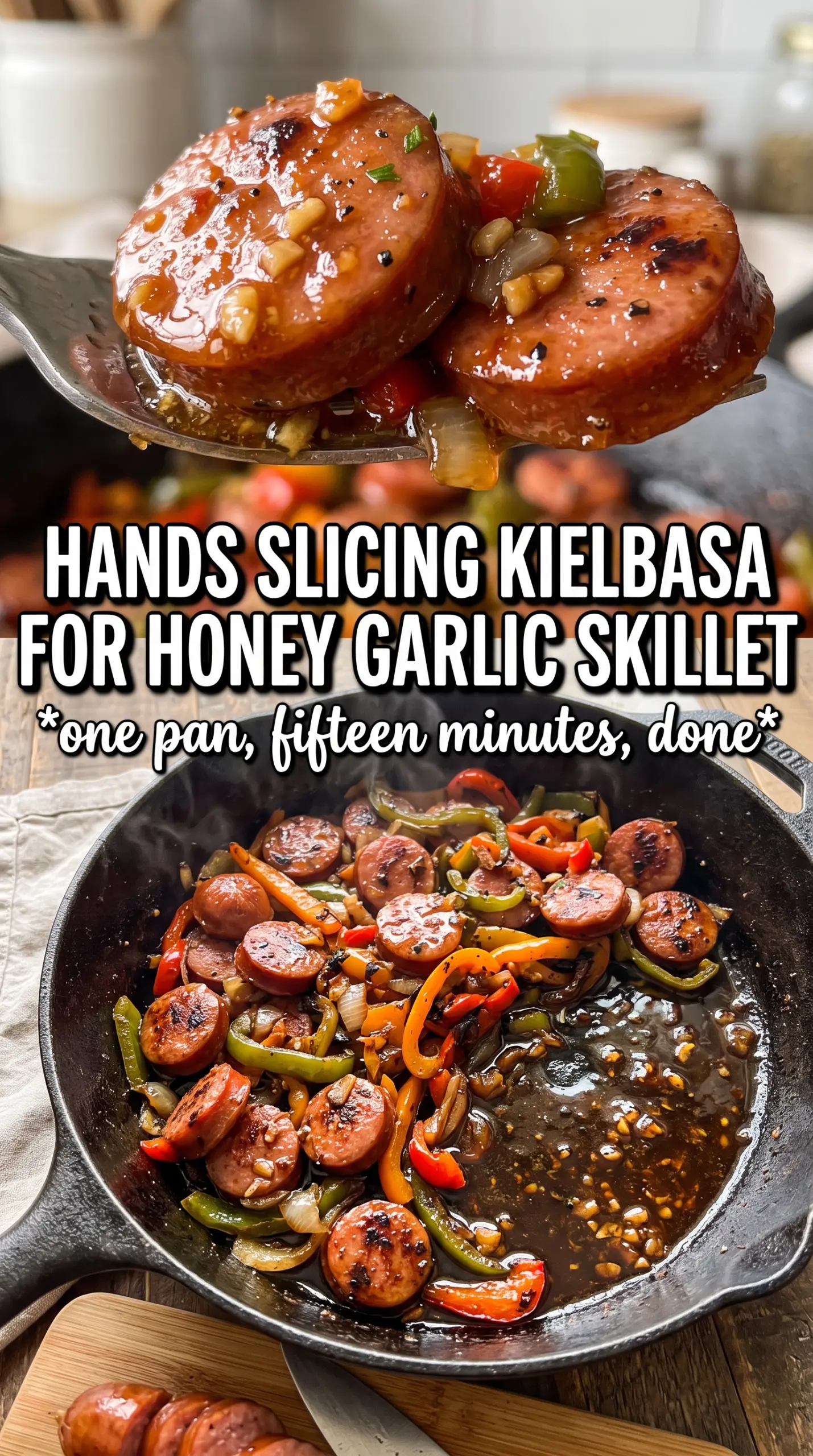
- Kielbasa — This brings the smoky, seasoned backbone of the dish. Pre-cooked kielbasa is ideal because it browns fast without drying out. If you swap in another smoked sausage, keep the slices thick enough to hold their shape.
- Honey — Honey is what makes the glaze cling and caramelize. Maple syrup can work in a pinch, but it tastes softer and less sticky. If you want the sauce to coat instead of slide off, don’t thin it with extra liquid.
- Dijon mustard — Dijon keeps the glaze from tasting one-note sweet. It also helps the sauce emulsify so the oil and honey don’t separate before roasting. Yellow mustard will work, but it reads sharper and less rounded.
- Broccoli, bell peppers, zucchini, and red onion — This mix gives you color, texture, and a little sweetness from the onion as it roasts. Cut the zucchini a bit thicker than the peppers so it doesn’t collapse before the rest is done. If you change the vegetable mix, keep moisture-heavy vegetables from crowding the pan.
- Soy sauce and garlic — Soy sauce brings salt and depth, while garlic gives the glaze its punch. Fresh garlic matters here; jarred garlic tends to taste flatter after roasting. If you need a gluten-free version, use tamari and keep everything else the same.
Roasting the Sauce Until It Grabs Onto Everything
Mix the glaze first
Whisk the honey, garlic, soy sauce, Dijon, olive oil, and red pepper flakes until the mixture looks smooth and glossy. You want the honey fully loosened so it coats the sausage and vegetables evenly instead of pooling in thick streaks. If the honey is stubborn, whisk for a few extra seconds; don’t add water, or the glaze won’t concentrate properly in the oven.
Toss everything until it’s evenly coated
Put the sliced kielbasa and vegetables in a large bowl and pour the sauce over the top. Toss until every piece has a light sheen, with no dry spots hiding underneath. If the vegetables look drenched, the pan is probably too small, and they’ll steam rather than roast.
Roast until the edges darken
Spread the mixture across a lined baking sheet in a single layer and roast at 400°F for 20 to 25 minutes, tossing halfway through. The broccoli should be tender at the stems, the peppers should have browned edges, and the kielbasa should show caramelized spots where it touched the pan. Pull it as soon as the glaze looks sticky and the vegetables are cooked through; waiting too long is how the zucchini goes mushy.
Finish while the pan is hot
Scatter on sesame seeds and sliced green onions right after it comes out of the oven. The residual heat wakes up the garnish and keeps the sesame seeds fragrant. Serve immediately, while the glaze is still tacky and the sausage edges are crisp.
Three Practical Ways to Work This Into Your Week
Make It Gluten-Free
Swap the soy sauce for tamari or a certified gluten-free soy sauce. The glaze keeps the same sticky finish, and the flavor stays deep and salty without changing the texture of the vegetables or sausage.
Lower the Sugar Without Losing the Glaze
Cut the honey back to 3 tablespoons and add an extra teaspoon of Dijon. You’ll get a thinner coating and slightly less caramelization, but the sauce still clings well enough to season the pan properly.
Use What You Have in the Vegetable Drawer
Cauliflower, Brussels sprouts, or sliced carrots all work if you keep the pieces bite-sized. Harder vegetables need a few extra minutes in the oven, while softer ones like mushrooms should be added halfway through so they don’t release too much liquid.
Storage and Reheating
- Refrigerator: Store leftovers in an airtight container for up to 4 days. The vegetables soften a bit, but the flavor holds well.
- Freezer: It freezes, but the zucchini and peppers lose some texture after thawing. If you plan to freeze it, use a firmer vegetable mix and cool it completely before packing it up.
- Reheating: Warm it on a sheet pan in a 375°F oven until hot, about 10 to 12 minutes. The oven brings back the edges better than the microwave, which tends to make the vegetables watery and the sausage rubbery.
Answers to the Questions Worth Asking
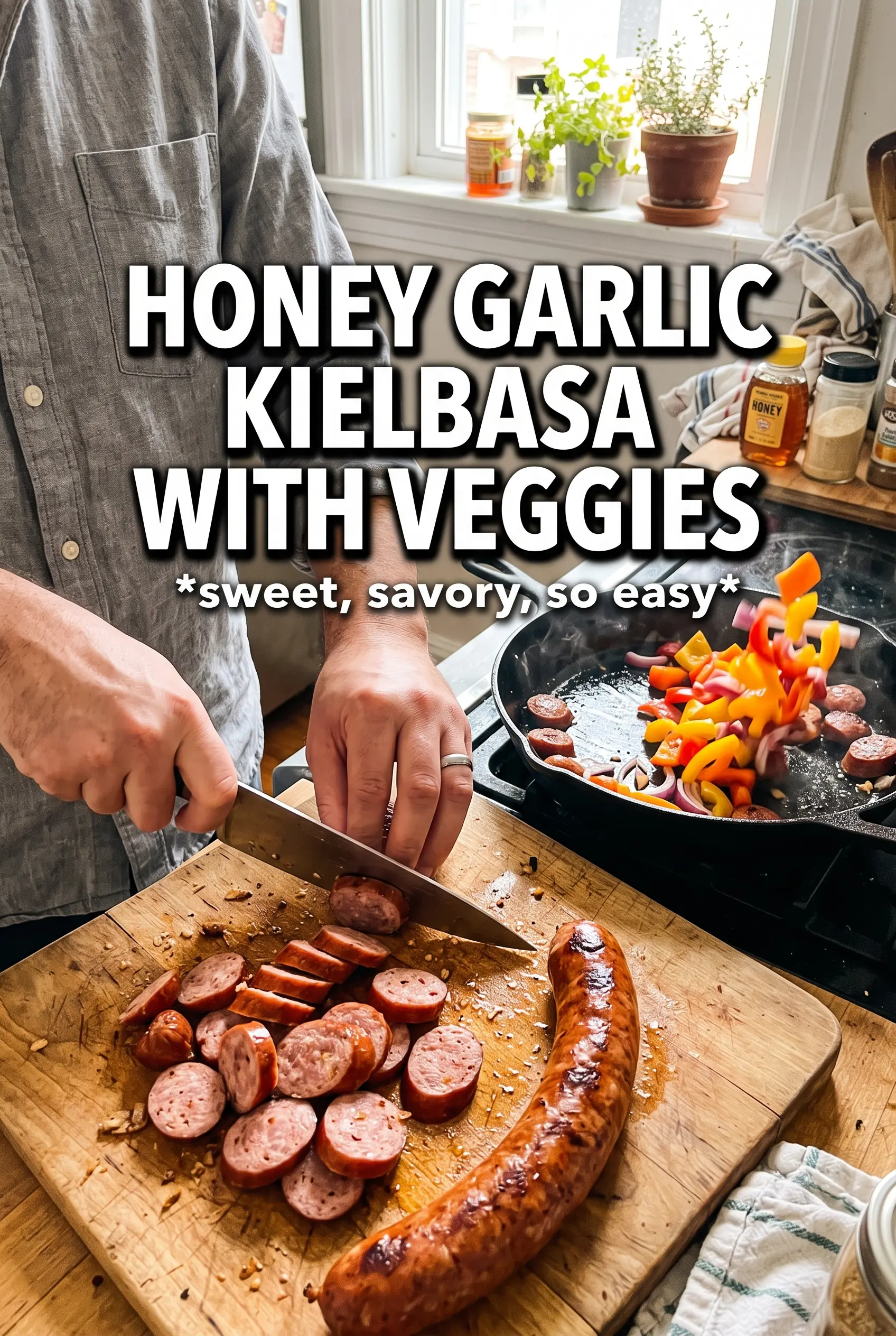
Honey Garlic Kielbasa With Veggies
Ingredients
Equipment
Method
- Preheat the oven to 400F and line a large baking sheet.
- Whisk together honey, minced garlic, soy sauce, Dijon mustard, olive oil, and red pepper flakes until the sauce looks uniform.
- Toss kielbasa rounds, broccoli florets, red bell pepper, green bell pepper, zucchini, and red onion with the honey garlic sauce.
- Spread everything on the baking sheet in a single layer.
- Roast for 20-25 minutes, tossing halfway, until the vegetables are caramelized and the kielbasa is golden.
- Scatter sesame seeds and green onions over the hot sheet pan and serve immediately.