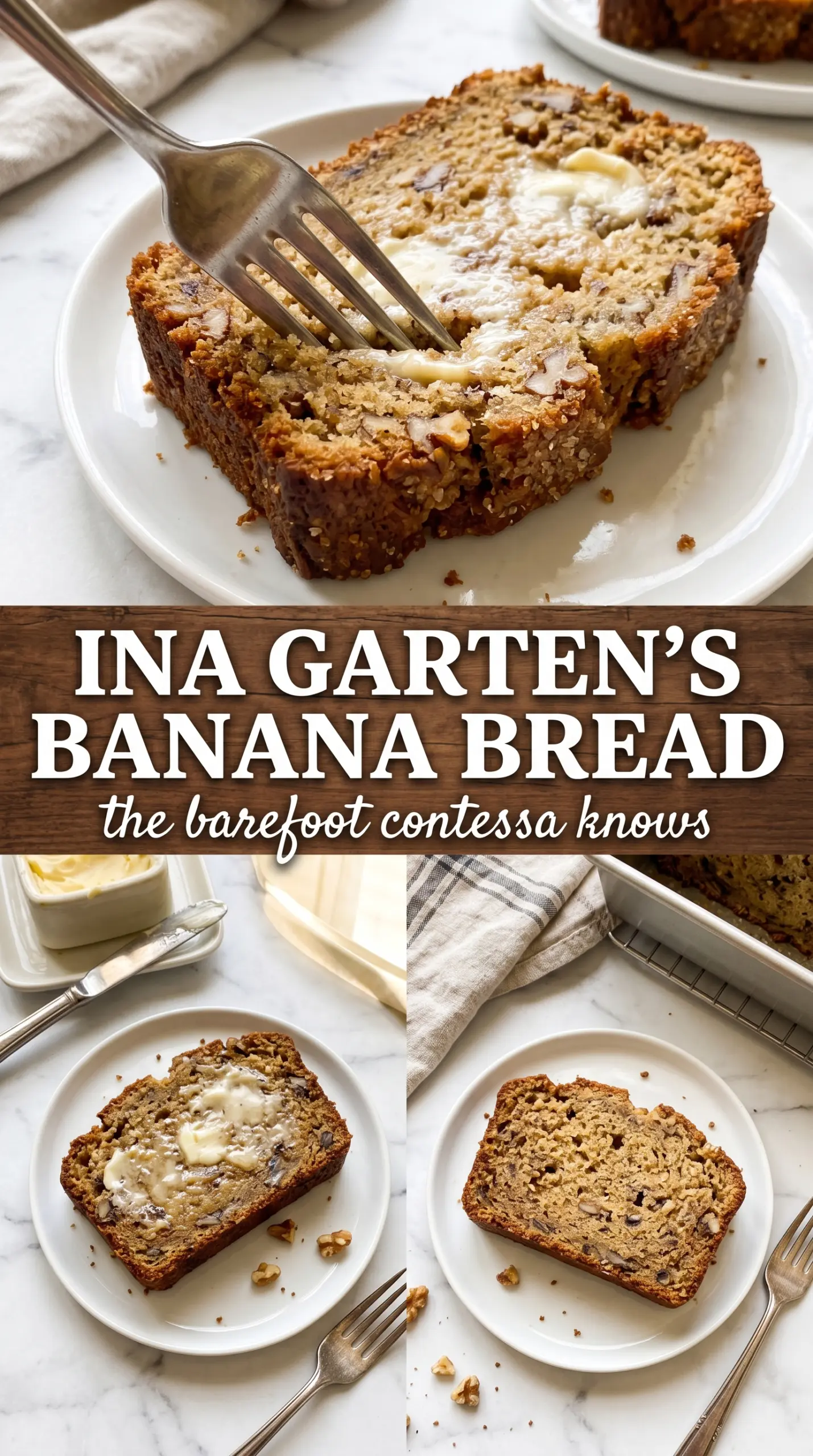
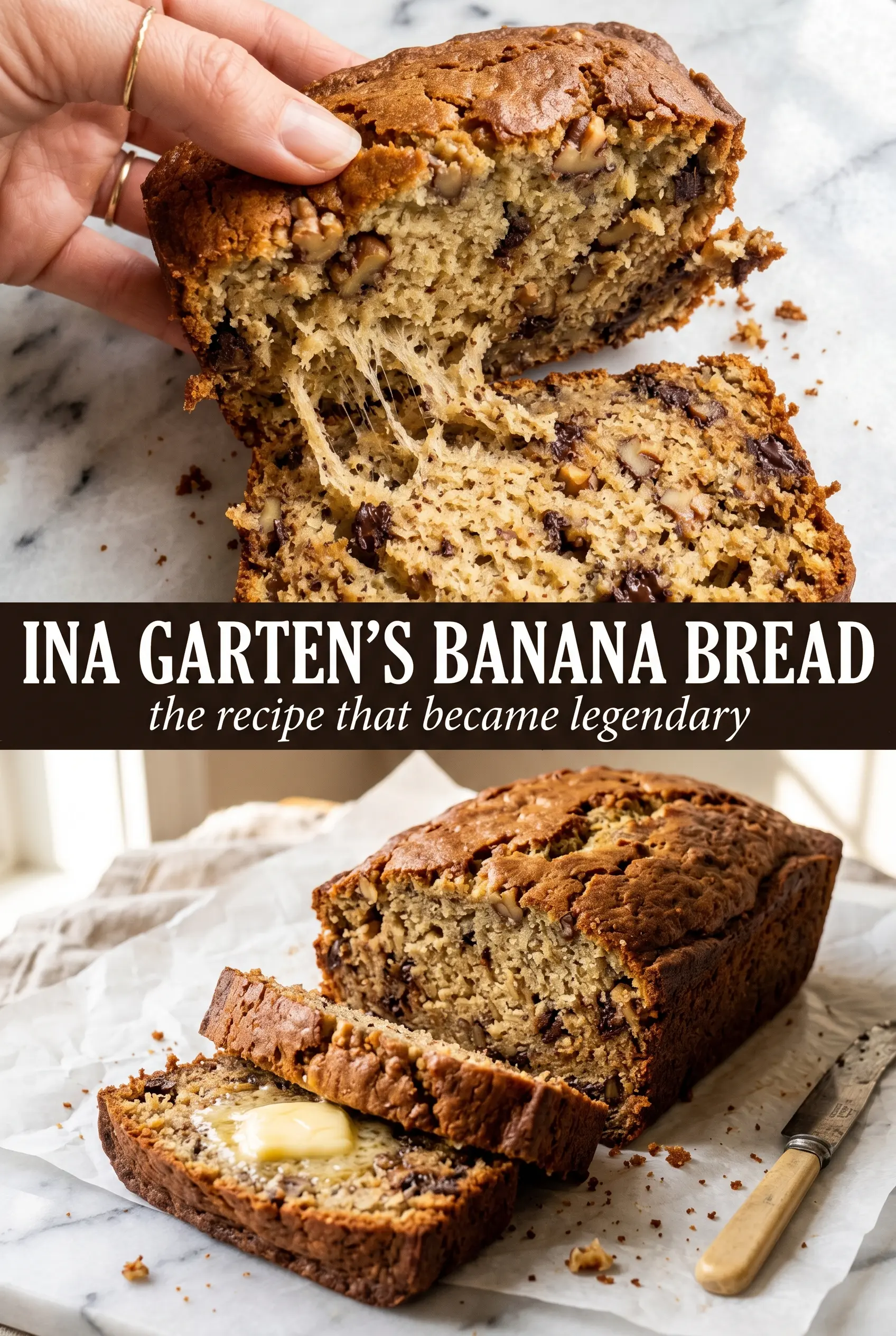
Ina Garten’s banana bread bakes up with a deep golden crust, a tender crumb, and enough banana flavor to taste like the loaf has been waiting for you all day. The sour cream keeps it plush without making it heavy, and the walnuts give each slice a little crunch that keeps the texture interesting from top to bottom. It’s the kind of loaf that slices cleanly after a short rest, which matters when you want neat pieces instead of a crumbly mess.
What sets this version apart is the balance. The butter and sugar get beaten until light, which gives the bread a finer, more bakery-style crumb than a quick stir-together loaf. Sour cream adds moisture and a gentle tang that keeps the sweetness in check, while the bananas stay front and center instead of disappearing into the background. Pressing whole walnut halves into the top is more than decoration; it gives the crust a little structure and lets you know exactly what’s inside before the first slice.
Below, I’m breaking down the small details that matter most, from getting the banana texture right to keeping the loaf from turning dense in the middle. If you’ve ever had banana bread that looked done on top but stayed gummy underneath, the process notes here will help.
The loaf came out with that deep golden top and a really soft crumb, and the sour cream kept it moist for days. I loved the walnut halves on top because they made it look bakery-worthy without any extra work.
Like this sour cream banana bread? Save it to Pinterest for the days when you want a bakery-style loaf with toasted walnuts and a soft, moist crumb.
The Reason This Loaf Stays Tender Instead of Heavy
Banana bread gets dense when the batter is overworked or when the wet ingredients don’t have enough fat and acid to keep the crumb open. This loaf avoids both problems. The butter and sugar are beaten until pale, which traps air before the flour goes in, and the sour cream gives the batter enough body to stay moist without turning custardy.
The other thing people miss is banana texture. You want mashed bananas, not banana purée. A few small soft lumps are fine because they melt into the loaf as it bakes and keep the crumb from tasting one-note. If your bananas are extremely wet, the center can bake up gummy, so stop mashing once they’re mostly smooth.
What Each Ingredient Is Actually Doing Here
- Ripe bananas — The darker and softer they are, the more flavor they bring. You want fruit that mashes easily and smells sweet; firm yellow bananas won’t give you the same depth.
- Sour cream — This is the ingredient that keeps the loaf plush for days. Plain yogurt can stand in, but the batter will taste a little sharper and the texture is slightly less rich.
- Butter and sugar — Beating them together until light is what gives the loaf a finer crumb. If you rush this step, the bread still works, but it bakes up tighter and less elegant.
- Walnuts — Toasting them first wakes up their flavor and keeps them from tasting flat inside the loaf. The whole halves on top aren’t just for looks; they add a little crunch to the first slice and make the crust more interesting.
- All-purpose flour — This gives the loaf structure without making it dry. Don’t swap in whole wheat flour at a one-to-one ratio unless you’re okay with a heavier, less tender crumb.
Building the Batter Without Deflating It
Start with a real creamed base
Beat the butter and sugar together until the mixture looks lighter in color and fluffy around the edges of the bowl. That usually takes a few minutes, and it’s worth the time because this is where the loaf gets its lift. If the butter is too cold, the mixture will look sandy instead of airy, and the bread will bake more densely.
Add the eggs one at a time
Let each egg disappear before adding the next. That keeps the batter smooth and prevents it from curdling, which can happen if you dump both in at once. A slightly split look isn’t fatal once the flour goes in, but a fully broken batter at this stage usually means the butter was too cold or the eggs were too chilled.
Fold in the dry ingredients at the end
Once the bananas and sour cream are mixed in, add the flour, baking soda, and salt just until you stop seeing streaks. Overmixing develops gluten and turns the loaf chewy instead of tender. Stop as soon as the flour disappears, then fold in the walnuts and get the batter into the pan.
Bake until the center is set, not just the top
The top should be deeply golden and the crack down the center should look set, but the real test is a toothpick coming out clean from the middle. If the top browns too fast before the center is done, lay a loose piece of foil over it for the last 15 minutes. Let the loaf cool for 15 minutes before turning it out; if you rush it, the edges can tear while the center is still too soft to hold together.
How to Adjust This Loaf for Different Kitchens and Eaters
Dairy-Free Version
Swap the butter for a neutral plant-based baking stick and use thick unsweetened dairy-free yogurt in place of the sour cream. The loaf will still be moist, but it won’t have quite the same rich, rounded flavor that dairy butter gives.
Nut-Free Loaf
Leave out the walnuts and bake the batter as written. The bread will be softer and a little more cake-like on top, so you lose the crunch, but the banana-sour cream base still carries the whole loaf.
Lower-Sugar Version
You can trim the sugar slightly, but don’t cut it too far. Sugar does more than sweeten here; it helps the loaf brown and stay moist. If you reduce it much below 1/2 cup, the crust will be paler and the texture less tender.
Storage and Reheating
- Refrigerator: Store covered for up to 5 days. The crumb firms up a little in the fridge, but the flavor stays good.
- Freezer: Wrap slices or the whole loaf tightly and freeze for up to 3 months. Slice first if you want grab-and-go portions.
- Reheating: Warm slices in a 300°F oven for 8 to 10 minutes or toast them lightly. The common mistake is microwaving too long, which makes the bread rubbery instead of soft.
Questions I Get Asked About This Recipe
Ina Garten Banana Bread
Ingredients
Equipment
Method
- Preheat the oven to 350°F and grease a 9x5 loaf pan and dust with flour, so the loaf releases cleanly after baking.
- Beat butter and sugar together until light and fluffy, about 3–4 minutes, scraping the sides as needed for a smoother batter.
- Add eggs one at a time, beating after each, then mix in vanilla and sour cream until the batter looks uniform.
- Stir in mashed bananas until combined, keeping the batter thick and cohesive.
- Fold in flour, baking soda, and salt until just combined, stopping as soon as no dry streaks remain.
- Fold in chopped walnuts for even distribution throughout the loaf.
- Pour the batter into the pan and press whole walnut halves down the center for a decorative topping.
- Bake for 65–70 minutes at 350°F until deep golden and a toothpick comes out clean, then cool 15 minutes before turning out.