
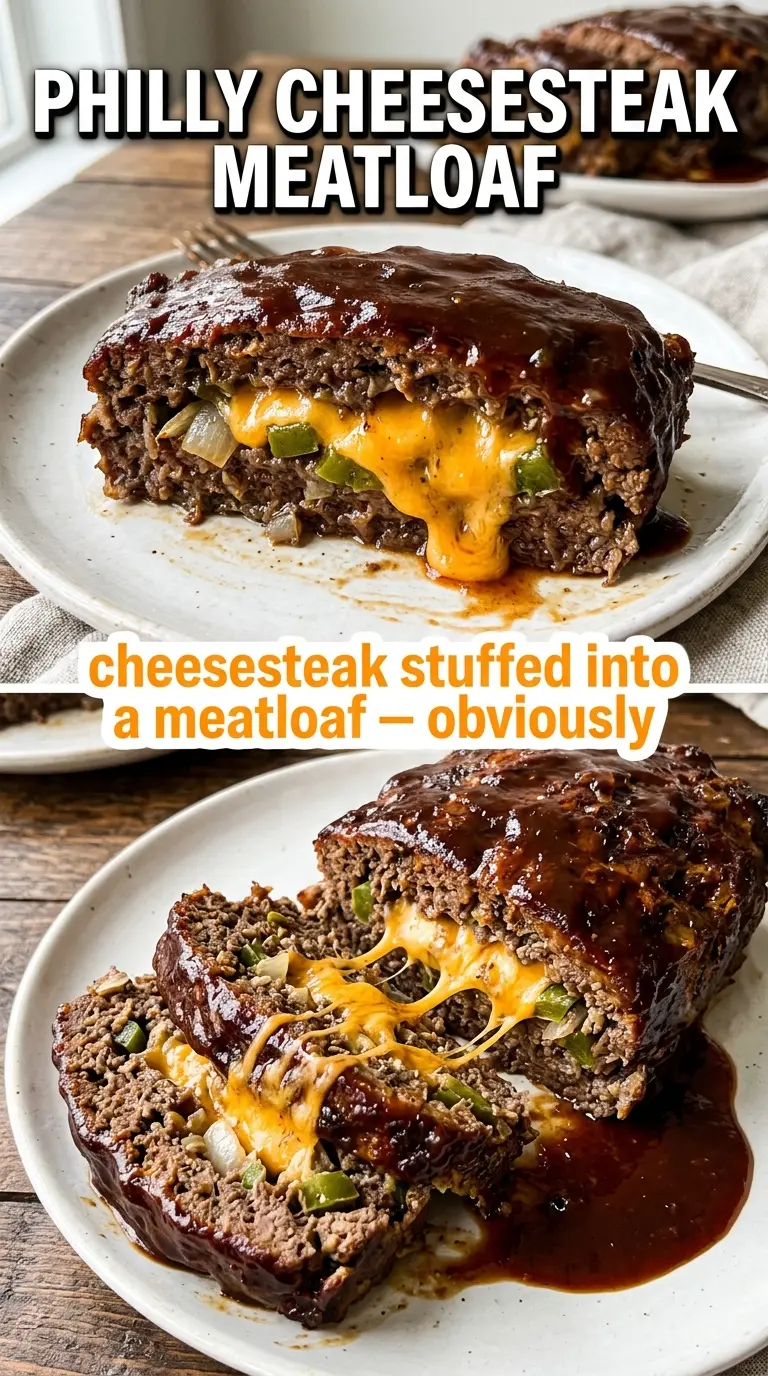
Juicy ground beef, caramelized peppers and onions, and a blanket of melted provolone turn this meatloaf into something that slices like comfort food but eats like a cheesesteak. The filling stays tucked inside the loaf, so every slice comes out with that familiar mix of savory beef, soft vegetables, and stretchy cheese instead of the filling sliding out onto the pan.
The trick is in the layering and the cooling. The vegetables need a quick sauté first so they soften and lose some moisture before they go inside the meatloaf. That keeps the center from turning soggy. A thin ketchup glaze on top gives you a little tang and helps the outside brown without taking over the Philly cheesesteak flavor.
Below, I’ll walk through the part that matters most: sealing the loaf well so the cheese stays put, plus the small changes that help this work if you want to swap the cheese or prep it ahead.
The peppers and onions stayed tender without making the loaf fall apart, and the provolone layer melted into every slice. I let it rest the full 10 minutes and it cut cleanly instead of spilling everywhere.
Save this Philly Cheesesteak Meatloaf for a hearty baked dinner with melted provolone, tender peppers, and a clean slice every time.
The Part Most Meatloaf Gets Wrong: Moist Filling Without a Soggy Center
Stuffed meatloaf fails in one of two ways: the filling leaks out, or the vegetables dump too much moisture into the beef. This version avoids both by cooking the peppers, onions, and mushrooms first until they’ve softened and released some of their water. You’re not trying to brown them deeply. You’re trying to take the raw edge off and keep the final slice neat.
The other piece that matters is how you seal the loaf. The bottom layer needs to go all the way to the edges of the pan, and the top layer has to cover every bit of the filling, especially along the seams. If there’s a gap, the cheese will find it. That’s how you end up with an empty-looking center and a mess on the baking sheet.
What the Beef, Cheese, and Glaze Are Each Doing Here
- Ground beef — Use a blend that isn’t ultra-lean. You need enough fat to keep the loaf juicy after a long bake. Very lean beef turns dense and dry, especially once you add breadcrumbs and eggs.
- Provolone — This is the cheese that gives the loaf its Philly finish. It melts cleanly and has a mild, savory pull. Mozzarella works in a pinch, but you’ll lose that classic cheesesteak taste.
- Mushrooms — They add the earthy, steakhouse note that makes the filling taste fuller. Slice them thin so they soften in the same amount of time as the peppers and onions. Thick chunks leave the center uneven.
- Breadcrumbs and eggs — These are the structure. They hold the beef together without making it heavy. If you need a gluten-free version, use gluten-free breadcrumbs in the same amount and mix just until combined so the loaf stays tender.
- Ketchup glaze — The glaze gives you a little tang and caramelized color on top. Don’t skip it unless you want a paler loaf. Brush it on before baking so it sets into the crust instead of sitting wet on the surface.
Building the Loaf So the Cheese Stays Inside
Cooking the Vegetables First
Start with the butter, peppers, onion, and mushrooms in a hot skillet and cook them just until softened. You should still see some shape left in the vegetables; if they collapse completely, they’ve gone too far and can turn mushy inside the loaf. Let them cool slightly before assembling so they don’t start melting the cheese before the meatloaf goes into the oven.
Mixing the Meat Without Overworking It
Combine the beef, breadcrumbs, eggs, Worcestershire, garlic powder, salt, and pepper with your hands or a fork until everything is evenly mixed. Stop there. If you squeeze and mash the mixture too long, the loaf bakes up tight and bouncy instead of tender. The mixture should hold together when pressed, but it shouldn’t look paste-like.
Layering and Sealing the Filling
Press half the meat mixture into the loaf pan and push it a little up the sides. Lay down the provolone, then the vegetables, then the second layer of cheese. Cover with the remaining meat and press the edges together firmly so the filling is enclosed. Any thin spot on top can split open in the oven, so smooth the surface and check the seams before adding the glaze.
Baking Until the Center Reaches 160°F
Bake at 350°F until the internal temperature hits 160°F in the center, usually 55 to 65 minutes. The top should look browned and the glaze should have set. If the top darkens too quickly, lay a loose piece of foil over it for the last part of baking. Don’t cut early; the cheese and juices need that full rest to settle.
Resting Before the First Slice
Let the loaf sit for 10 minutes after it comes out of the oven. That pause keeps the filling from rushing out when you slice it. If you cut right away, the cheese will be loose and the meatloaf can crumble at the edges. A short rest gives you the clean, stacked slices you want from a stuffed loaf.
How to Adapt This for Different Kitchens and Different Schedules
Gluten-Free Meatloaf
Swap in gluten-free breadcrumbs in the same amount. The texture stays close to the original as long as you don’t overmix the beef. Skip any Worcestershire sauce that contains wheat if your brand does, and check the label before you start.
Swap the Provolone
Swiss gives you a little more sharpness, while mozzarella melts a bit stretchier and milder. Provolone is still the best match for the classic cheesesteak feel, but either swap works if you want a slightly different finish. Avoid very soft cheeses that can disappear into the filling.
Make It Ahead
Assemble the loaf up to 24 hours ahead, cover it tightly, and refrigerate it before baking. The vegetables should be cooled first so they don’t steam the meat mixture. Add a few extra minutes to the bake time if it goes into the oven cold from the fridge.
Storage and Reheating
- Refrigerator: Store slices in an airtight container for up to 4 days. The cheese stays flavorful, though the loaf firms up a bit once chilled.
- Freezer: This freezes well. Wrap slices tightly and freeze for up to 3 months, or freeze the whole baked loaf if you want an easy future dinner.
- Reheating: Reheat slices covered in a 325°F oven until warmed through, or use the microwave in short bursts. The common mistake is blasting it on high heat, which makes the beef dry and the cheese greasy.